The Camino Português for Older Walkers: What to Expect
Updated August 2026
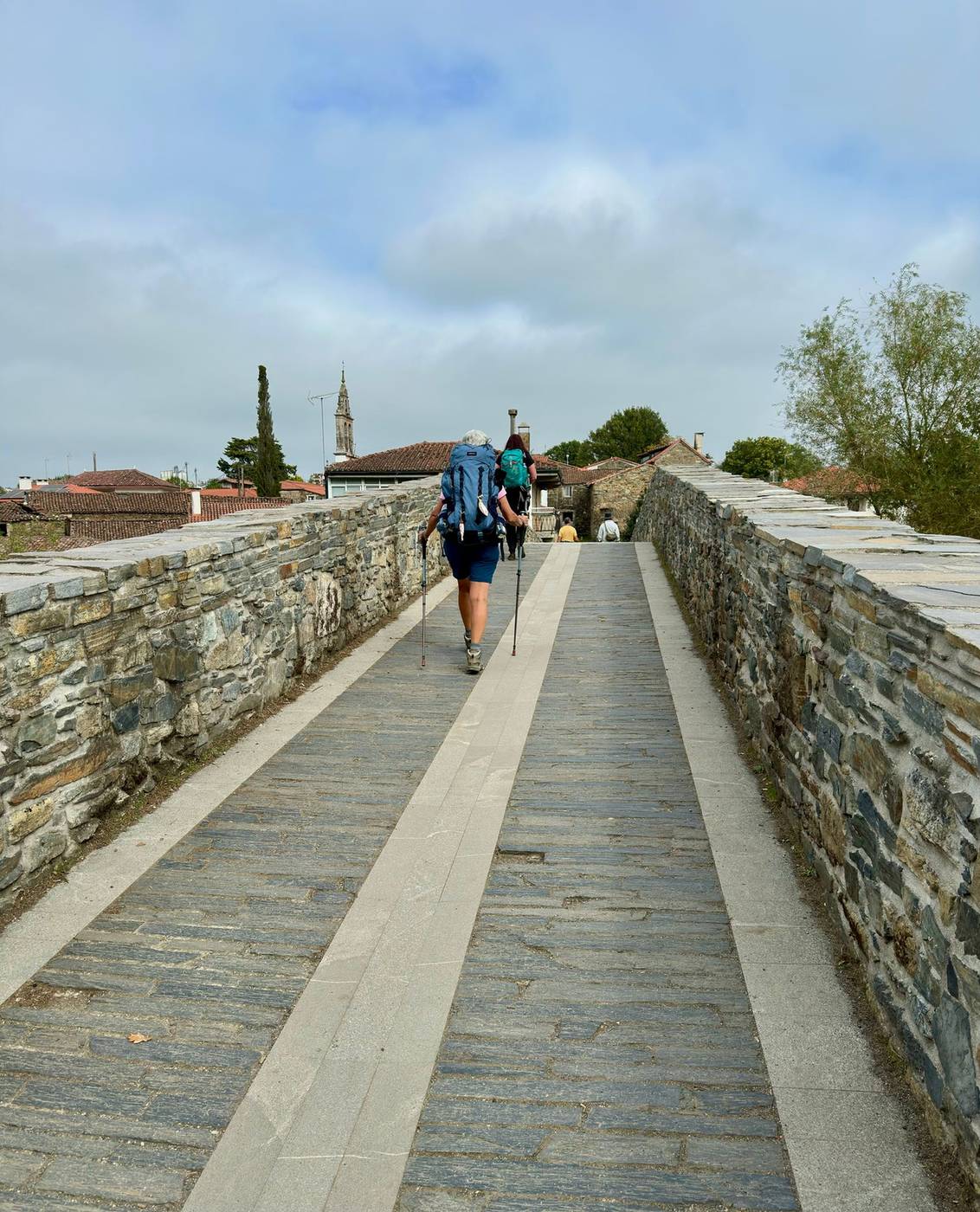
Short answer: you can walk the Camino Português in your 60s, and you will not be unusual for doing it. Most walkers on the Porto to Santiago route are between 40 and 70, and a 65-year-old covering 20 km a day is the ordinary sight here, not the exception. There are no mountain passes, typical stages run 18–25 km, private rooms are everywhere, and luggage transfer costs €7–10 a bag. What genuinely needs managing (cobbles, summer heat and one long stage) has straightforward fixes, and this guide goes through each of them.
Why this route suits walkers between 55 and 75
The Camino Português has a reputation as the gentler of the main Caminos, and for once the reputation is accurate. The Central route out of Porto crosses no mountains. The terrain rolls through vineyards, eucalyptus woods, river valleys and a steady procession of small towns, and the climbs are short enough that you crest most of them thinking about coffee rather than your heart rate. Even the one genuinely steep pitch, the climb out of Ponte de Lima towards Rubiães, is a slow hour, not a mountain day, and it is behind you by mid-morning.
The infrastructure is the other half of the case. You pass shops, cafés and pharmacies every day. Towns arrive every few kilometres, which means water, shade, a bathroom and, importantly, a way out: taxis reach every stage of this route, so a knee that flares or an afternoon that turns too hot ends with a short ride, not an ordeal. You are never committed to anything you cannot step out of, and knowing that changes how the whole walk feels.
The commitment itself is flexible too. If two weeks on foot is more than you want, the Compostela, the pilgrim certificate issued in Santiago, requires only the final 100 km walked. Start in Tui, on the Spanish border, and that is five to six walking days, collecting two stamps a day in your credential along that stretch.
The real difficulty: cobbles, heat and one long day
The real difficulty of this route is not climbing. It is surface. Portuguese cobbles (calçada) and stretches of tarmac make up a large share of the walking, especially south of the border, and hard ground is cumulative: by day three it is feet and knees that complain, not lungs. Two things help more than anything else. Cushioned trail shoes rather than boots, because on this ground cushioning under the foot matters more than support around the ankle for most people; our footwear guide sets out the reasoning. And modest early stages, because feet make their peace with the surface across the first week if you let them.
Heat is the second real problem. From June to August the afternoons are seriously hot, and the middle of the day is no time to be on an open stretch of track. The fix is the local one: start at dawn, finish by early afternoon, rest through the worst of it. Better still, choose your month. May, June and September are the kindest for older walkers: mild, sociable, everything open. Our when-to-walk guide compares the months properly.
The third difficulty is one specific number: Barcelos to Ponte de Lima, about 34 km, the longest common stage on the Central route. Nobody is obliged to walk it as printed. Split it with a night part-way. Walk it light, with your main bag sent ahead. Or let a taxi carry you past a few kilometres of it on the day. All three happen constantly, and everyone still arrives in Ponte de Lima in time for dinner by the river.
Pacing a sensible itinerary
Typical stages run 18–25 km, and the stage list in any guidebook is a suggestion, not a rule. Accommodation on the Central route is frequent enough that almost any day can be shortened, and our distance-per-day guide maps where the natural break points are. A sensible shape for a first Camino in your 60s: keep the first two or three days short while your feet adjust to the cobbles, settle into around 20 km through the middle, and never schedule your longest day immediately after your worst night's sleep.
Build in a rest day as well, not because you will necessarily need it, but because it removes the pressure of needing it. One every five or six walking days is a reasonable rhythm, and Ponte de Lima and Pontevedra both reward an extra night. If you never use it, it becomes a spare day for weather or for a town you like too much to leave. At this pace, Porto to Santiago fits comfortably inside two weeks; with less time, start at Tui and the Compostela is still yours.
Comfort is a strategy, not a compromise
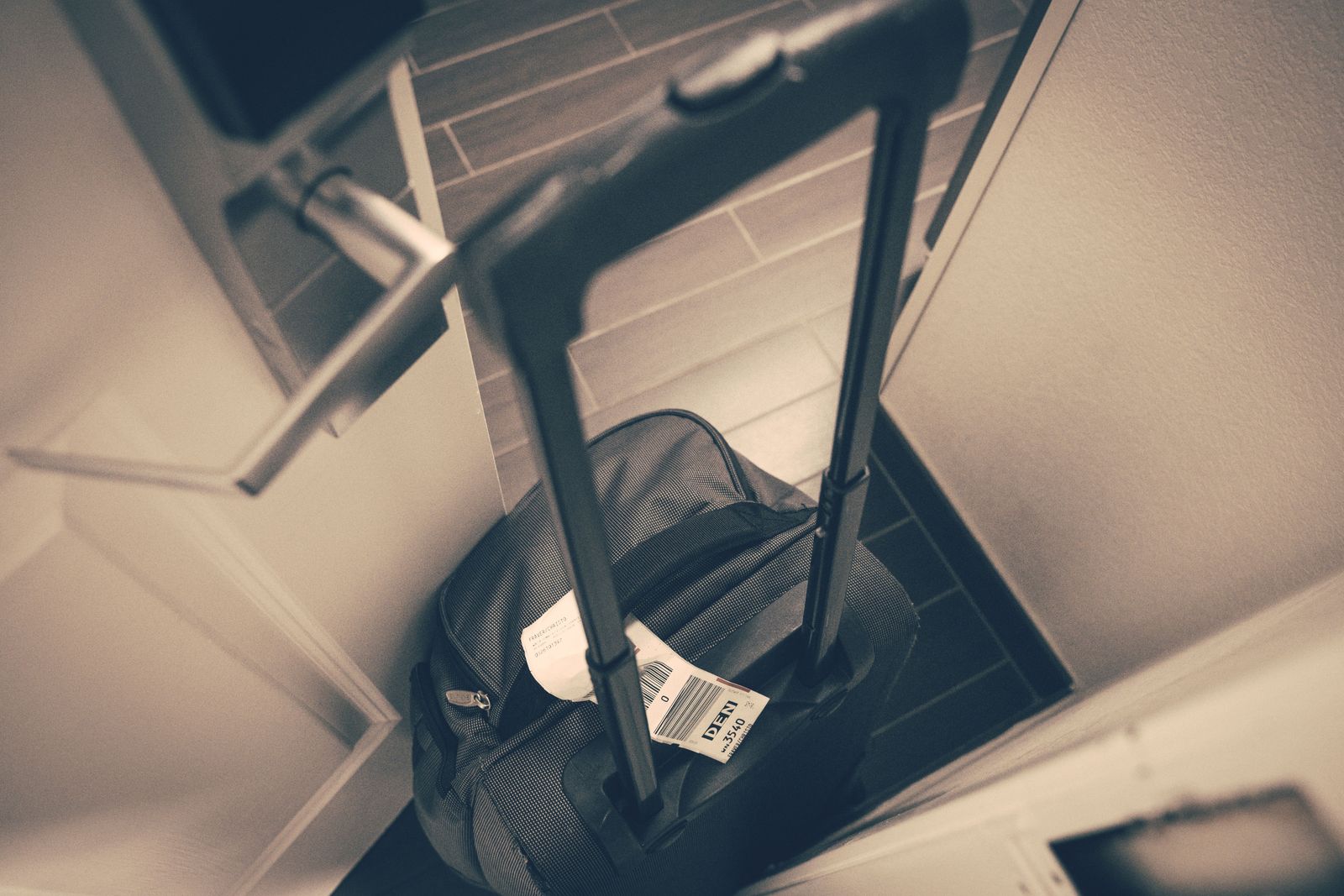
Luggage transfer is part of how this route normally works. For €7–10 a bag a stage, a van moves your main pack to your next bed while you walk with a day-pack holding water, documents, a layer and a blister kit. You book it the evening before, tie the tag on in the morning, and the bag is waiting when you arrive. Retired couples use it, walking clubs use it, people half your age use it, and the Compostela does not ask what you carried. Our luggage transfer guide explains the booking, stage by stage.
The same thinking applies to where you sleep. Albergue dorms are part of Camino culture, but on the Português they are optional, not required: private rooms and small guesthouses are plentiful the whole way, and an undisturbed night is worth more to your walking than any piece of gear. The one trade-off is that rooms need booking ahead in season, which our where-to-sleep guide covers town by town.
Getting your body ready
For most reasonably healthy people, eight weeks of progressive training is enough. The shape of it matters more than the totals: build distance gradually, walk on pavement and cobbles as well as soft ground, and include back-to-back long days (two 18–20 km walks on consecutive days) carrying the loaded day-pack and wearing the shoes you will actually take. The back-to-back days are the real rehearsal, because the Camino's only real trick is asking you to do it all again tomorrow. The full eight-week structure is in our training plan guide.
Feet and knees deserve specific attention. Feet: shoes thoroughly worn in before you travel, and deal with any hot spot at the first warmth rather than the first blister. Knees: the descents here are short but frequent, and poles take a genuine share of the load off them. If your knees complain on stairs at home, train with the poles and bring them.
See your doctor before you book if you have a heart or lung condition, take medication that behaves differently in heat, are recovering from surgery, or have joint pain you have not had assessed. That is not a formality; it is simply walking with your numbers known. Once you are on the route, the safety net is real, with pharmacies and shops daily and taxis on any stage, so one bad day never has to become a bad week.
Walking alone in your 60s
Plenty of the walkers we meet are alone, by design or by circumstance: walking after retirement, after losing a husband or wife, or with a partner who preferred to stay at home. The picture is that the Camino Português is one of the easiest places there is to be alone without being lonely. The route has a rhythm that manufactures company: the same faces at the café stop, at the next stamp, at dinner. By the third day people greet you by name. By Santiago, some of them are friends.
If company matters to you, choose the shoulder months. May, June and September carry a steady, sociable flow of walkers, many of them your age, many of them also alone on day one. The waymarking is clear and the route passes through inhabited country all day, so the practical side of walking solo is undramatic. You keep your own pace all day and choose your own table each evening, which for many people is exactly the point.
Holy Year 2027: book earlier than feels natural
2027 is a Holy Year in Santiago, the first since 2021, and everyone on the route expects it to be the busiest yet. If you plan to walk in 2027, book your rooms earlier than feels natural. The private rooms in the small towns are precisely what sells out first, months ahead for the popular weeks. The route will absorb the numbers, but the walkers who sleep where they intended are the ones who booked early. If your dates are flexible, 2026 or the quieter ends of the 2027 season will be gentler.
The short answer
It is not too late, and you would not be the exception: on this route, you are the demographic. The Camino Português asks for preparation, not youth: eight weeks of walking at home, shoes chosen for cobbles, stages of a length you decide, a bag sent ahead if you want it, a room of your own each night. Every real difficulty here has a fix that is already normal practice on the route.
Start with your dates and your feet: pick a shoulder month, read the footwear guide, and download our free packing checklist (PDF) to see how little you actually need to carry. The rest is walking, and you already know how to do that.
Next steps: begin with the complete guide to the Camino Português, shape your weeks with how far to walk each day, and settle the comfort questions in where to sleep.
Common questions
Is 65 too old to walk the Camino de Santiago?
No. On the Camino Português most walkers are between 40 and 70, so at 65 you are the route's core demographic rather than its outlier. There are no mountain passes, stages run 18–25 km, services appear daily and taxis reach every stage. With about eight weeks of walking to prepare, a reasonably healthy 65-year-old manages it comfortably.
How many kilometres a day do you walk on the Camino Português?
Typical stages are 18–25 km, and most can be shortened because towns with accommodation come frequently. The longest common stage on the Central route, Barcelos to Ponte de Lima at about 34 km, can be split with an overnight part-way or walked light using luggage transfer. You set the distances, not the guidebook.
Do you have to carry your own backpack on the Camino Português?
No. Luggage transfer is standard on this route and costs €7–10 per bag per stage. A van takes your main bag to your next accommodation while you walk with a small day-pack carrying water, documents, a warm layer and a blister kit. You book it the evening before, and walkers of every age use it.
Can I get the Compostela without walking all the way from Porto?
Yes. The Compostela requires only the final 100 km on foot, so starting in Tui on the Spanish border qualifies, roughly five to six walking days to Santiago. On that stretch you need two stamps per day in your pilgrim credential, which cafés, churches and accommodation provide as a matter of routine.