How Luggage Transfer Works on the Camino Português
Updated August 2026
Short answer: a courier van collects your bag from your accommodation's reception each morning (you drop it there by about 8:00) and it's waiting at your next accommodation by early-to-mid afternoon. The going rate is €7 to €8 per bag per stage, it works on both the Central and Coastal routes from Porto to Santiago, and you book either stage-by-stage the evening before or the whole route in one go. You walk with a small day-pack; the heavy bag travels by road.
| How you book it | How it works | Best for |
|---|---|---|
| Stage by stage | Envelope, form or WhatsApp the evening before; bag at reception by 8:00 | Flexible walkers deciding day by day |
| Whole route in advance | One booking, every stage pre-scheduled with one courier | Fixed itineraries, zero daily admin |
| Through your accommodation | Reception fills in the paperwork and hands the bag over | The least admin of all: just ask when you book the room |
| As part of a walking package | Transfer bundled with rooms and roadbook, arranged once | Walkers who want the whole thing handled: it's how our own itineraries work |
Every morning on this route you'll see it: a small van outside a guesthouse, a stack of rucksacks and suitcases with paper tags, gone by nine and reappearing thirty kilometres north. The system is mature, cheap and boringly reliable, but it has rules, and the catches only show up when you break one. Here's the whole of it.
The mechanics, step by step
- Book it. The evening before (stage-by-stage) or once for the whole walk. Reception will do it for you if you ask; this is a completely normal request, not a favour.
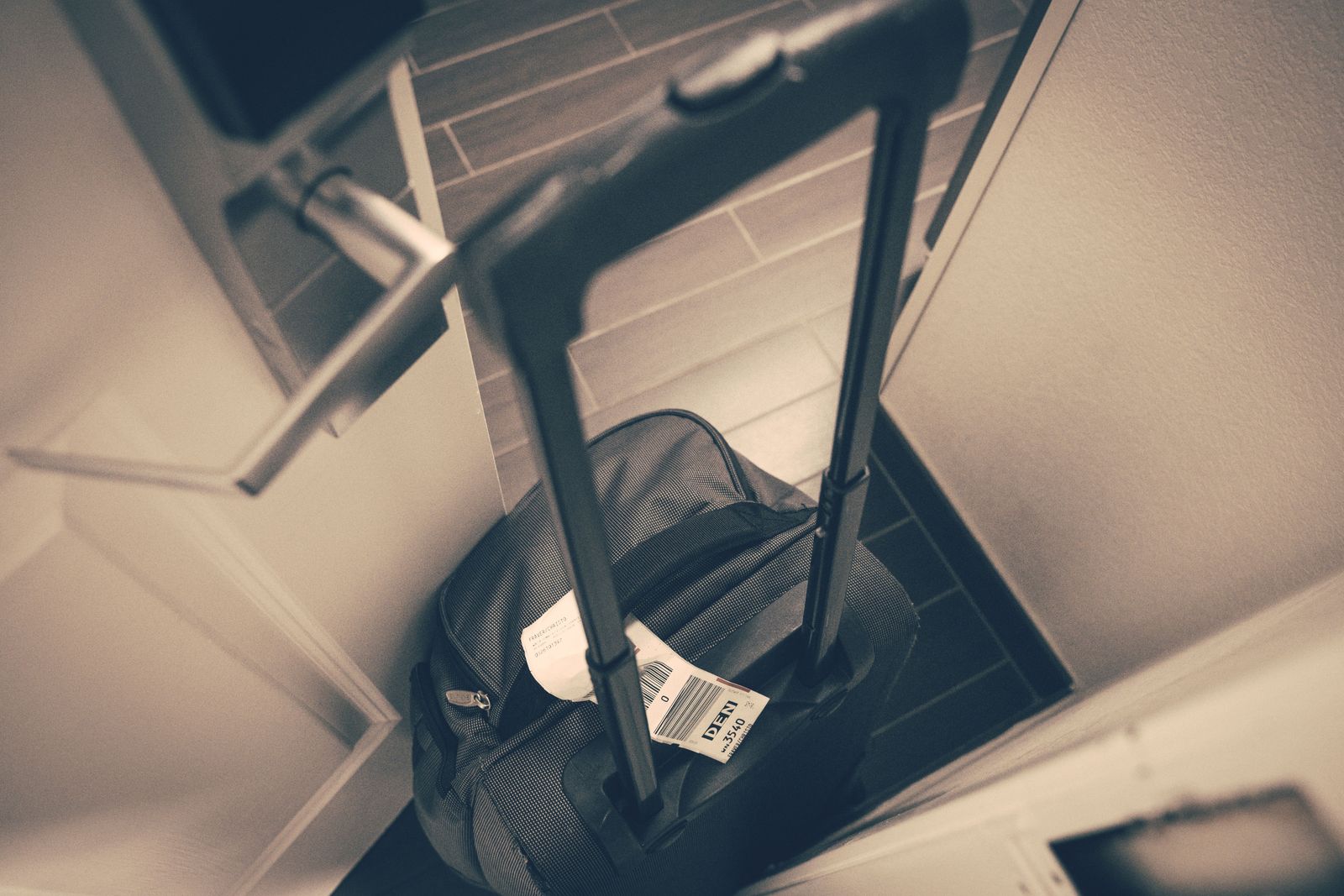
- Tag the bag. You fill in an envelope or label: your name, today's accommodation, tonight's accommodation and its town. With some couriers the fee goes in cash inside the envelope; others take card or payment online. One bag per booking.
- Reception by 8:00. Leave the bag at the desk (times vary slightly by courier; the envelope says). Then walk out the door carrying only your day-pack.
- The van does the stage by road. Pickups run through the morning; your bag rides with everyone else's headed to the same towns.
- It's waiting when you arrive. Bags land at the destination reception typically by 14:00–15:00, usually before you do. Repeat tomorrow.
Who actually moves the bags
On the Camino Português the name you'll see most is Tuitrans, based in Tui, covering Central and Coastal, Portugal and Galicia, stage-by-stage or whole-route. On the Spanish side there's also Correos, the postal service, whose Paq Mochila product does the same job with the full weight of a national logistics network behind it. Around them sits a handful of smaller regional couriers and taxi firms, and plenty of guesthouses have their own arrangement, which is why "ask at reception" is genuinely the best booking method on this route.
You don't need to agonise over the choice. Coverage overlaps, prices sit in the same band, and all of them are used to foreign names scrawled on envelopes. In peak season, and especially with the 2027 Holy Year coming, book whole-route service a few weeks ahead rather than days.
What it costs
Per stage, per bag: €7 to €8 between the standard overnight towns, at the rates operators quote for the current and coming season. A whole-route booking from Porto usually lands between €85 and €120 per bag depending on how many stages you split the walk into. Two people sharing one transferred bag is a common, sensible economy.
Against the total cost of the walk (€35 to 50 a day in albergues, €90 and up in private rooms, see the budget guide) call it €8 a day to not carry 10 kg. Whether that's money well spent is a personal question, and we answer ours further down.
The catches nobody mentions
- You need a staffed reception at both ends. This is the big one. Private albergues, guesthouses and hotels: fine. Municipal albergues: mostly not. There is no desk to hold bags, and many refuse courier luggage outright. If your plan is the municipal-albergue Camino, your plan is carrying your pack. The trade-offs between the two worlds are in where to sleep on the Camino Português.
- Your bag is unreachable from 8:00 to mid-afternoon. Anything you might need in those hours (documents, medication, rain shell, water) lives in your day-pack, every day, no exceptions.
- Change of plan means re-booking by evening. Decide to stop short, push further or swap Coastal for Central mid-walk and you must tell the courier the night before: the van follows the envelope, not you.
- Weight and count limits are real: commonly 15–20 kg and one bag per booking. The suitcase-plus-tote habit costs a second fee.
- Winter thins the service. Full daily coverage runs roughly March–October. November–February it still exists, but with lead times and minimums: plan, don't assume.
What stays on your back: the day-pack
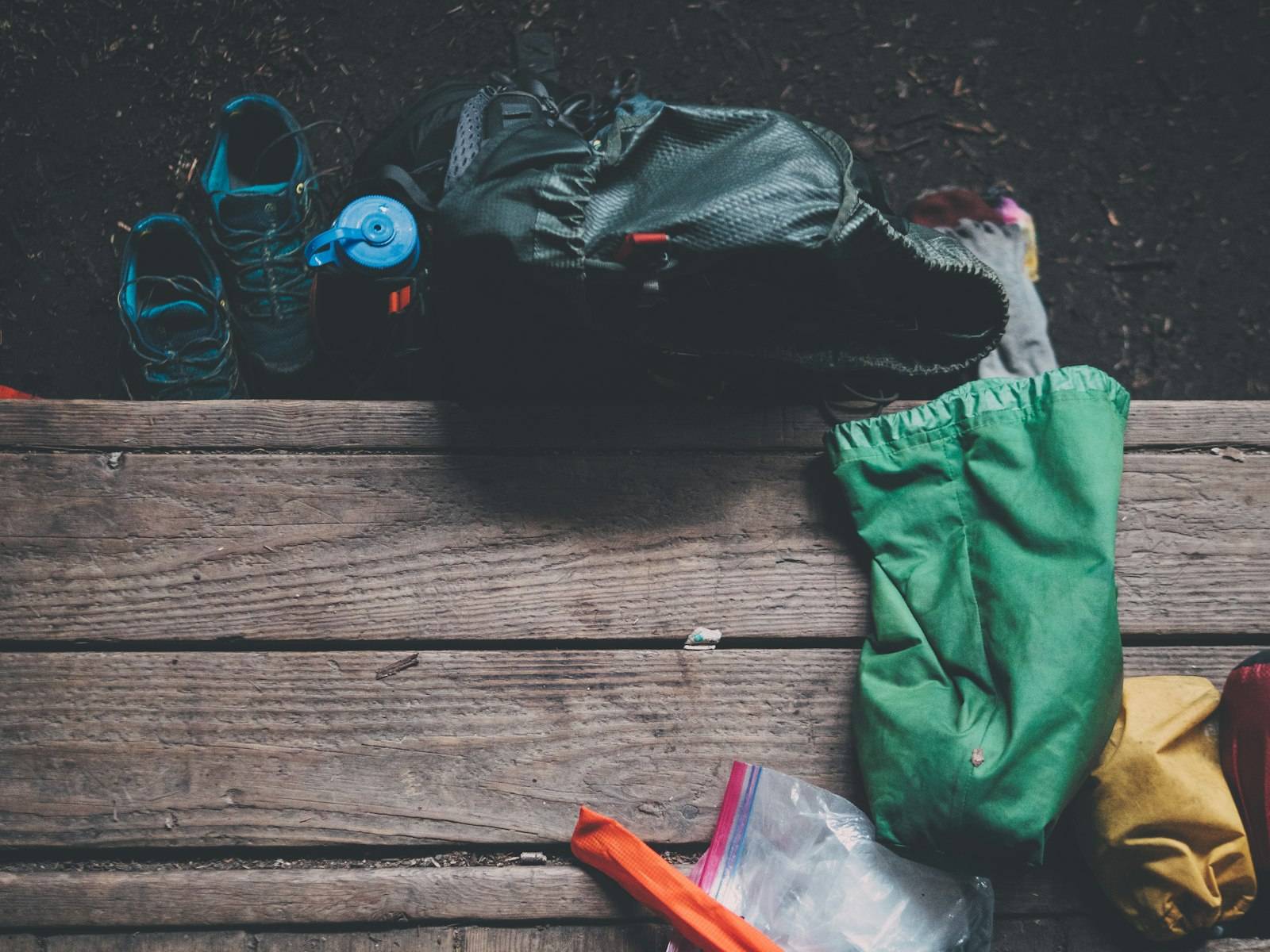
Transferring the big bag doesn't mean walking empty-handed. A 15–20 litre pack carries: credential and documents, money, phone and battery, 1–1.5 l of water, one warm layer, rain shell, blister kit, sunscreen, a snack. That's 3–4 kg: light enough to forget, complete enough that a closed pharmacy or a surprise downpour isn't a crisis. The full logic of what goes where is in what to pack for the Camino Português, and the one-page version is our packing checklist (PDF).
Our take: should you use it?
There's a quiet purity contest on every Camino about carrying your own pack. Ignore it. The Compostela asks that you walk; the certificate rules say nothing about your socks travelling by van, and the pilgrims of past centuries used donkeys without apparent spiritual damage.
Use it without a second thought if: knees, backs or feet have history; you're walking in serious summer heat; you're walking solo and want energy in reserve; you simply sleep better in guesthouses anyway, where the system works natively.
Skip it if: your loaded pack sits under about a tenth of your body weight and carries comfortably. At that weight the freedom of being self-contained genuinely is worth more than €8 a day, and you can change plans on a whim.
The hybrid nobody tells you about: carry your pack as default and book transfer tactically: for the two longest stages, a heat-wave day, or the morning after a bad night. €8 a stage spent exactly where it buys the most walk.
And if you'd rather the whole apparatus (rooms that take courier bags, transfers booked town by town, someone to call when a strap snaps) was simply handled: that's the machinery we build into every Bom Caminho itinerary, from here on the route.
Next steps: start with the complete guide to the Camino Português, settle your bed strategy in where to sleep, then use what to book to decide what's worth reserving before you fly.
Common questions
How much does luggage transfer cost on the Camino Português?
Around €7 to €8 per bag per stage at current rates between the usual overnight towns from Porto to Santiago. Whole-route packages from Porto typically land between €85 and €120 per bag, depending on how many stages you split the walk into. Prices drift a little each season, so treat these as the going rate, not gospel.
How do I book luggage transfer on the Camino Português?
Stage by stage: fill in the courier's envelope or online form the evening before and have your bag at reception by about 8:00; it is at your next accommodation by early-to-mid afternoon. Whole route: book once in advance with one operator, or simply let each accommodation arrange it; receptions do this daily.
Can I use luggage transfer if I sleep in municipal albergues?
Usually no. Municipal albergues generally have no staffed reception to hold or hand over bags, and many refuse courier luggage outright. The system is built around private albergues, guesthouses and hotels. If you are walking the municipal route, plan to carry your pack.
Is there a weight limit for Camino luggage transfer?
Yes: commonly 15–20 kg per bag, one bag per booking. Heavier bags, second bags or awkward items like bike boxes need arranging directly with the courier, usually for a surcharge.
Does luggage transfer work on the Coastal route too?
Yes. The couriers you will see most cover both the Central and Coastal Caminos, and the crossover points between them, from Porto to Santiago. Full daily service runs roughly March to October; in winter coverage thins and needs booking further ahead.