How to Train for the Camino Português (Even If You're Not Fit)
Updated August 2026
Short answer: you don't need to be fit; almost anyone finishes the Camino Português. Train by walking, in the exact shoes and socks you'll wear, so your feet and footwear break in together (that's what prevents blisters). A 6–8 week build-up is ideal: short walks at first, then a long 3–4 hour walk, then back-to-back days to rehearse consecutive walking. Even 3–4 weeks beats nothing. It's your feet, not your fitness, that decide how the walk feels.
Good news first: the Camino Português is one of the gentler long-distance walks, and ordinary people of all ages and fitness levels finish it every week. You do not need to be an athlete. But the difference between a walker who trained a little and one who didn't isn't fitness. It's suffering. A few weeks of easy preparation turns a painful slog into a genuine pleasure. Here's the doable version.
What's the only thing you really need to train?
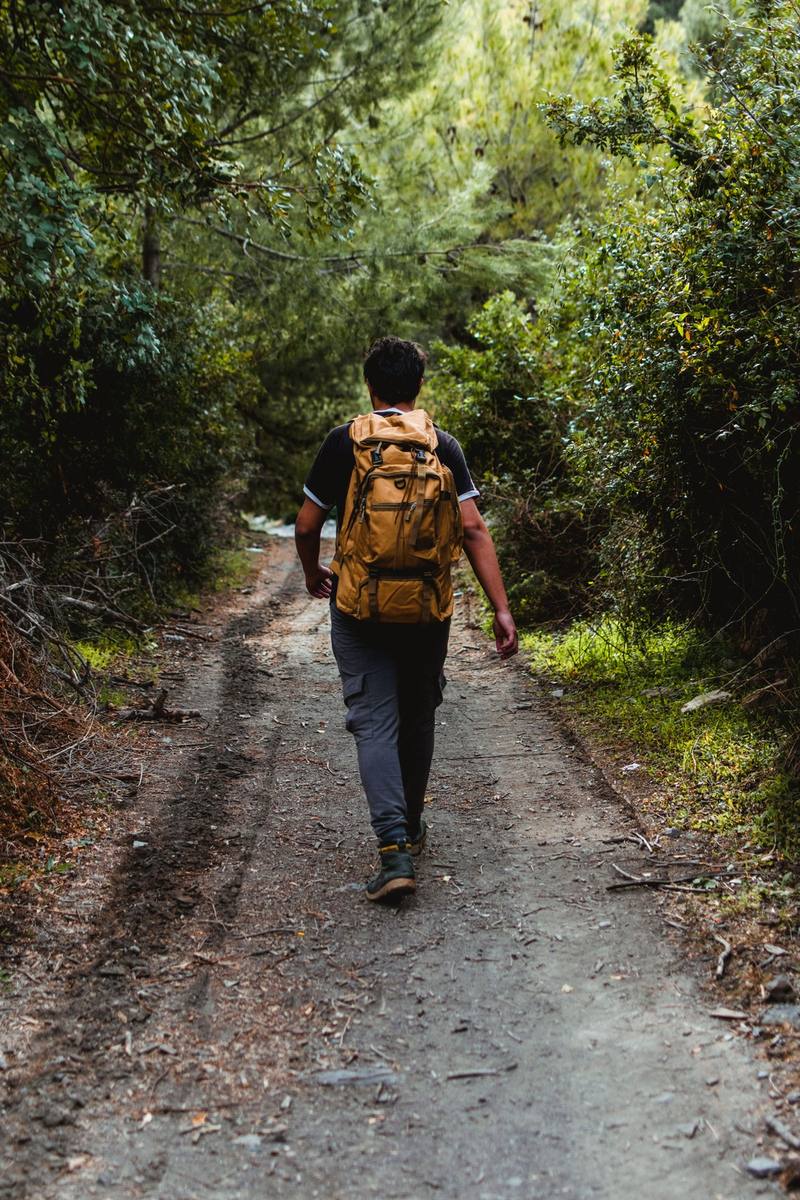
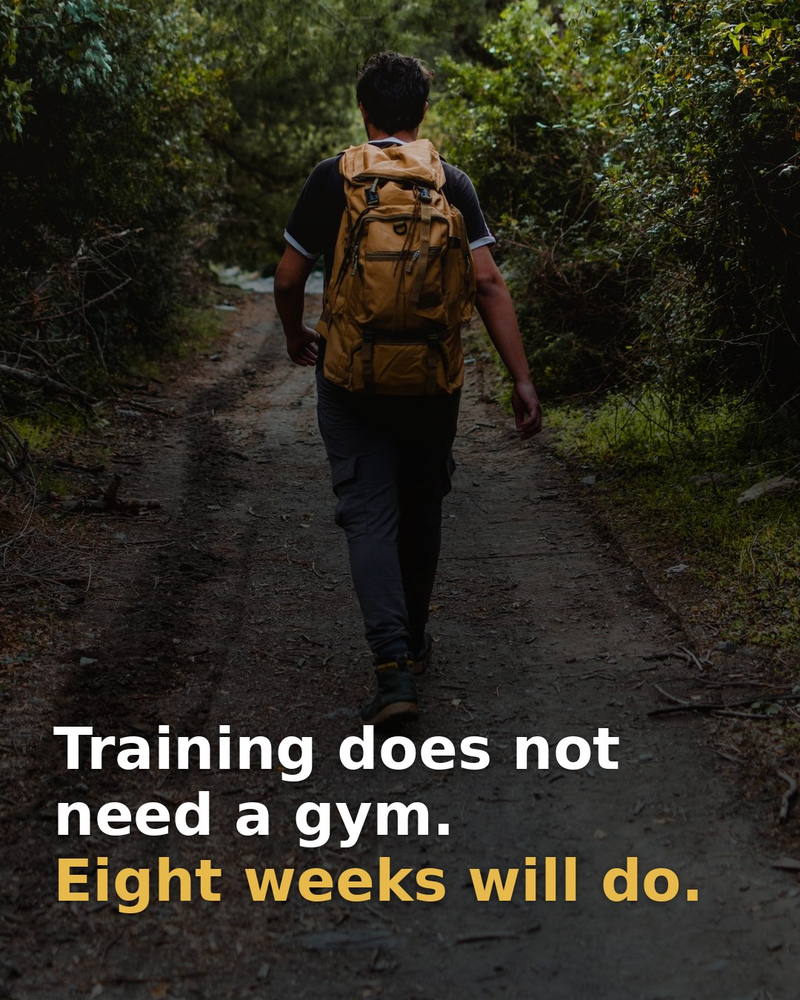
Forget the gym. The Camino is walking, so you train by walking: in the exact shoes and socks you'll wear on the trail. This does two things: it builds the right endurance, and (more importantly) it breaks in your feet and footwear together, which is what actually prevents the blisters that ruin Caminos.
What does a simple 6–8 week build-up look like?
If you have a couple of months, this is plenty:
- Weeks 1–2: Two or three walks a week, 30–60 minutes, comfortable pace. Just get moving in your shoes.
- Weeks 3–4: Stretch one walk to 1.5–2 hours. Add a small daypack with a bit of weight so your shoulders adapt.
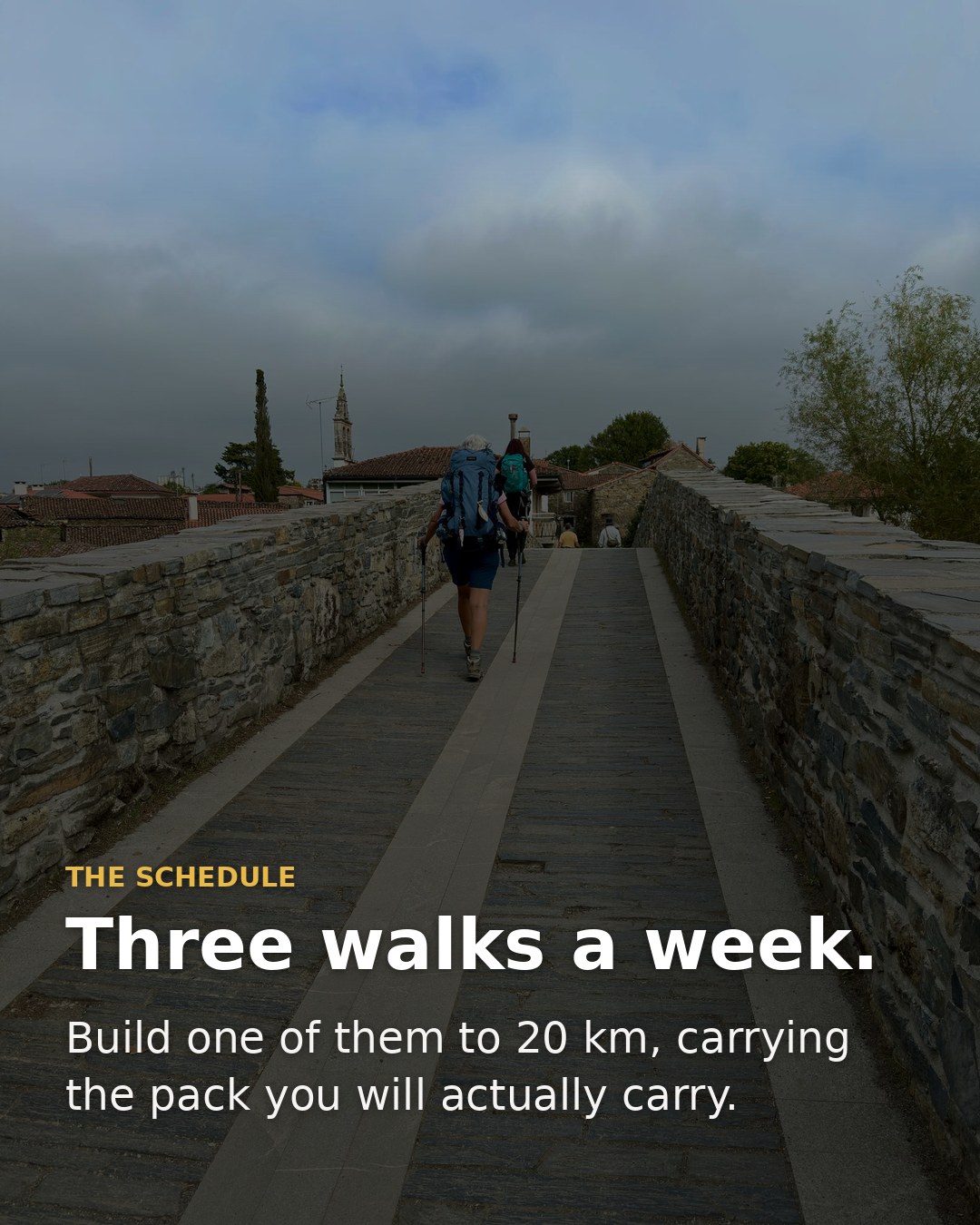
- Weeks 5–6: One longer walk of 3–4 hours (roughly a Camino day). Notice how your feet feel at hour three; that's the real test.
- Weeks 7–8: A back-to-back: a long walk one day, another the next. The Camino is consecutive days, and this is the bit people under-prepare for.
Short on time? Even 3–4 weeks of regular walking beats nothing enormously.

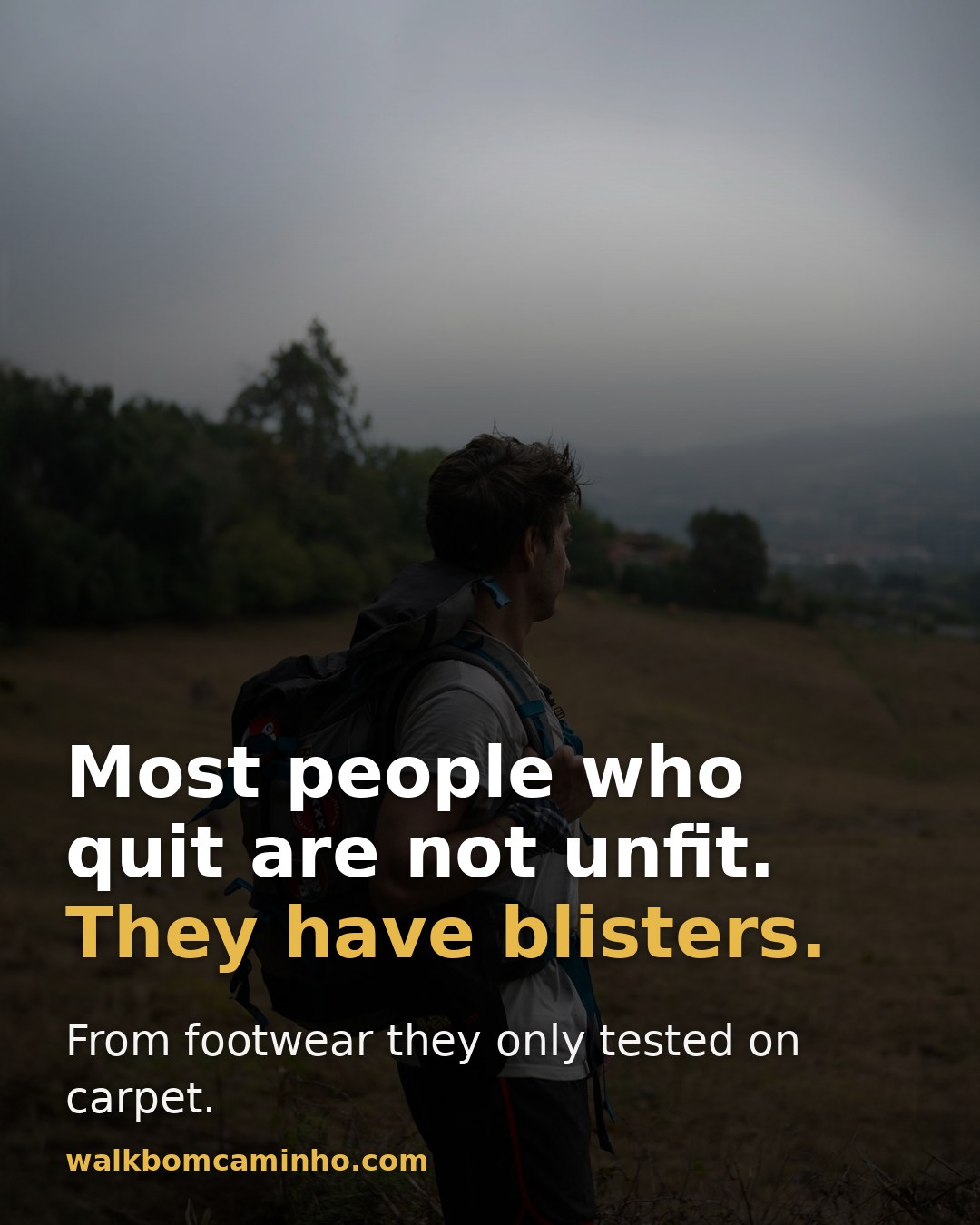
Train your feet, not just your legs
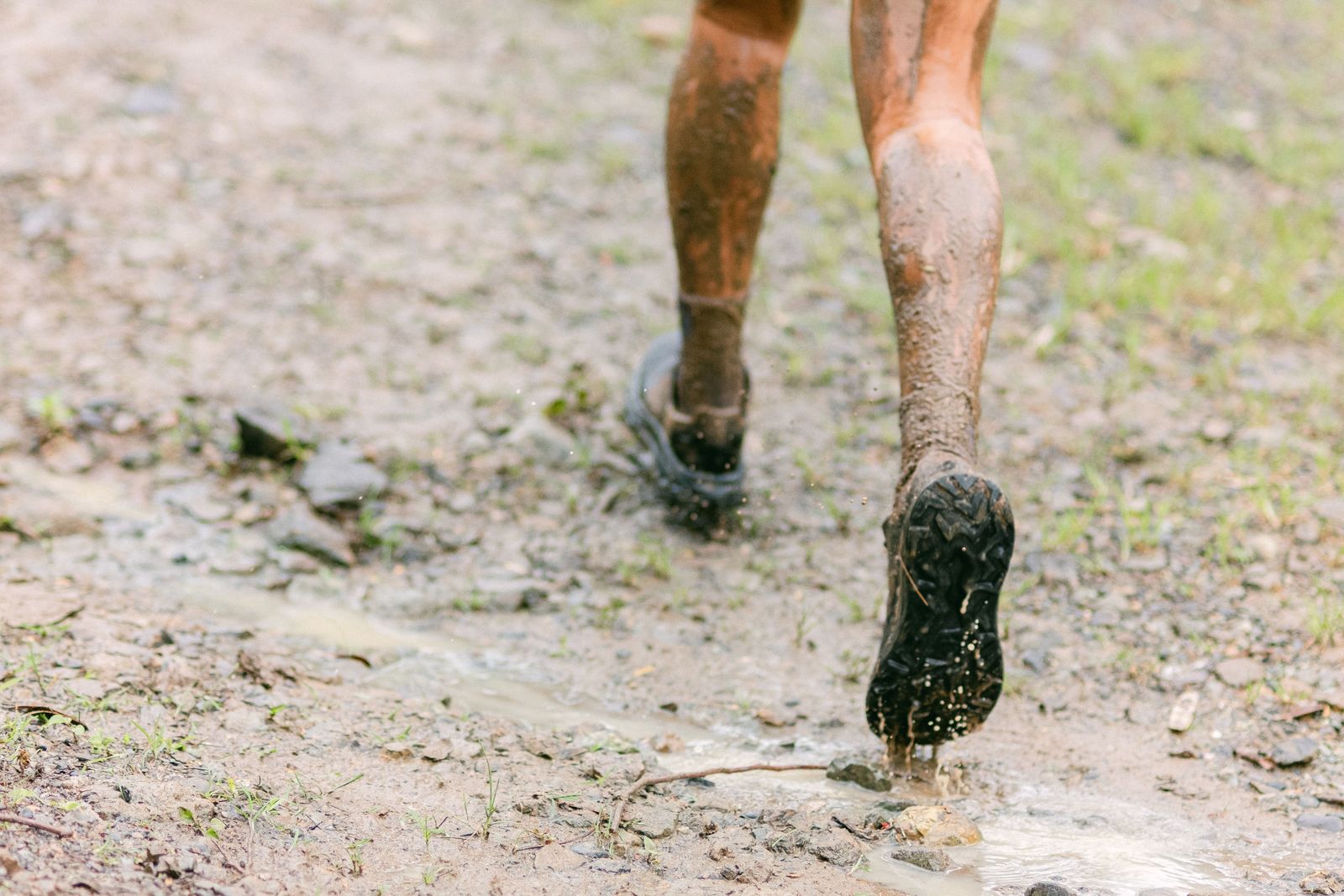
The legs cope. It's the feet that quit. So:
- Walk in the real shoes until they feel like part of you.
- Wear the real socks (merino/synthetic, never cotton).
- The moment you feel a hotspot on a training walk, that's a sign to fix the sock/lacing/shoe now. Better to learn it at home than on day two.
What about hills, weight and age?
- Hills: the Português has some, but it's not mountainous. Walk a few inclines if you can; don't stress.
- Weight: the lighter your pack, the easier everything: train light, walk light (or use a bag-transfer service and carry almost nothing).
- Age/fitness: people in their 60s and 70s walk it constantly. Pace, not power, is what gets you to Santiago.
What's the bottom line?
You're not training to be fit enough to survive the Camino; almost anyone can finish it. You're training so you enjoy it: so your feet are happy, your shoes are broken in, and your body knows what consecutive walking days feel like. A few weeks of easy walks in the right shoes is the whole secret.
Next steps: training is only half of it; walking lighter matters just as much, so see what to pack (and how light to go), then plan when to walk and read what the first three days actually feel like.
Common questions
Do you need to be fit to walk the Camino Português?
No. The Camino Português is one of the gentler long-distance walks, and ordinary people of all ages and fitness levels finish it every week. You don't need to be an athlete. The difference a little training makes is not whether you finish but how much you suffer along the way.
How should I train for the Camino Português?
Train by walking, in the exact shoes and socks you'll wear on the trail. That builds the right endurance and, more importantly, breaks in your feet and footwear together, which is what prevents blisters. Forget the gym: the Camino is walking, so you train by walking.
How many weeks of training do I need for the Camino Português?
A 6–8 week build-up is plenty: start with two or three 30–60 minute walks a week, stretch one walk to 1.5–2 hours with a light daypack, then add a 3–4 hour walk and finally back-to-back days. Even 3–4 weeks of regular walking beats no preparation enormously.
Why do feet matter more than fitness on the Camino?
Because the legs cope but the feet are what quit. Walk in your real shoes until they feel like part of you, wear merino or synthetic socks rather than cotton, and the moment you feel a hotspot on a training walk, fix the sock, lacing or shoe. Better to learn it at home than on day two.
Can older or unfit people walk the Camino Português?
Yes. People in their 60s and 70s walk it constantly. Pace, not power, is what gets you to Santiago, and walking lighter, or using a bag-transfer service, makes it easier still.