The Best Footwear for the Camino Português (and How to Break It In)
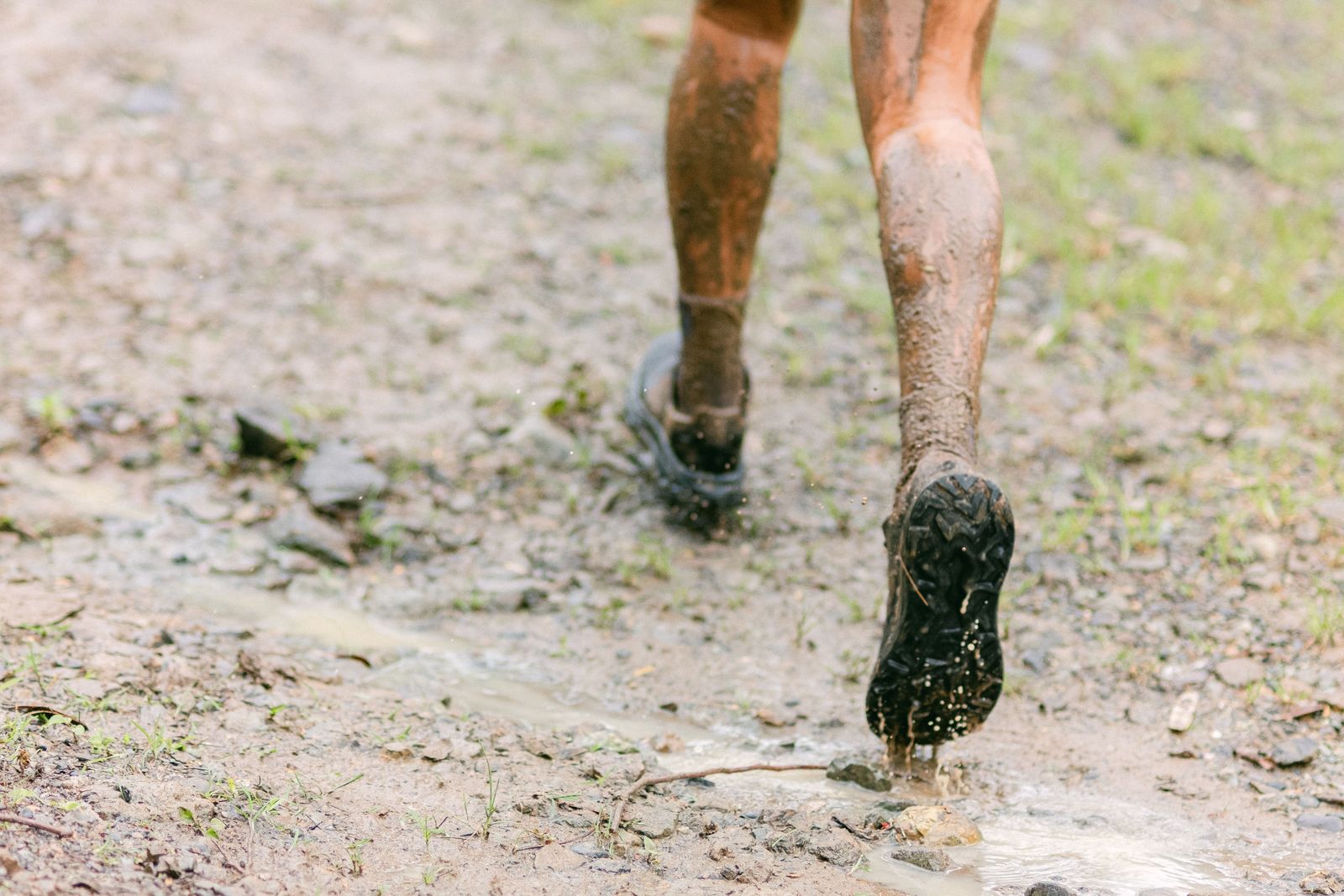
Short answer: for most walkers, trail runners or light walking shoes are the best footwear for the Camino Português, not heavy hiking boots. This is a low-altitude route walked mostly on hard surfaces: cobbles, tarmac and firm tracks, with nothing technical underfoot. Cushioning, grip and room for swelling feet matter far more than ankle-high leather. Go breathable in summer, waterproof or fast-drying in the wetter months. Whatever you buy, break it in for weeks. Never start in new shoes.
| Footwear | Best for | The trade-off |
|---|---|---|
| Trail runners | Most walkers, most of the year: cushioned, light, quick to dry | Less structure under a heavy pack; soles wear out faster than boots |
| Light walking shoes | Walkers who want more firmness and durability than a runner | Heavier and warmer; longer to break in and slower to dry |
| Hiking boots | Winter mud, heavy loads, ankles with a history | Overkill on tarmac and cobbles: heat, weight, more blisters |
Nothing you pack has more power to make or wreck this walk than what's on your feet. The good news: this route asks far less of a shoe than the outdoor marketing assumes, so choosing is simpler than it looks. And we won't name brands or models, because lines change yearly and feet differ wildly. Category, fit and preparation decide how yours feel in Santiago.
Why heavy boots are usually the wrong call
Traditional hiking boots are built for mountains: rocky ground, big loads, cold. The Camino Português has almost none of that. Its biggest climb, the Portela Grande after Ponte de Lima, tops out around 400 metres, and a huge share of it runs on hard, man-made surfaces: cobbled lanes, tarmac, gravel tracks and, on the coastal variant, long wooden boardwalks.
On ground like that, a stiff boot works against you. Every step lifts its weight, and weight on the feet costs disproportionately more effort than weight on the back. Boots trap heat, and hot, damp skin is where blisters begin. The ankle support they're sold on solves a problem this route barely has: the walkers hobbling into Pontevedra with taped heels are usually in stiff new boots. Recalibrate before you spend anything: the complete guide to walking the Camino Português covers what the route is really like underfoot.
Trail runners vs walking shoes vs boots
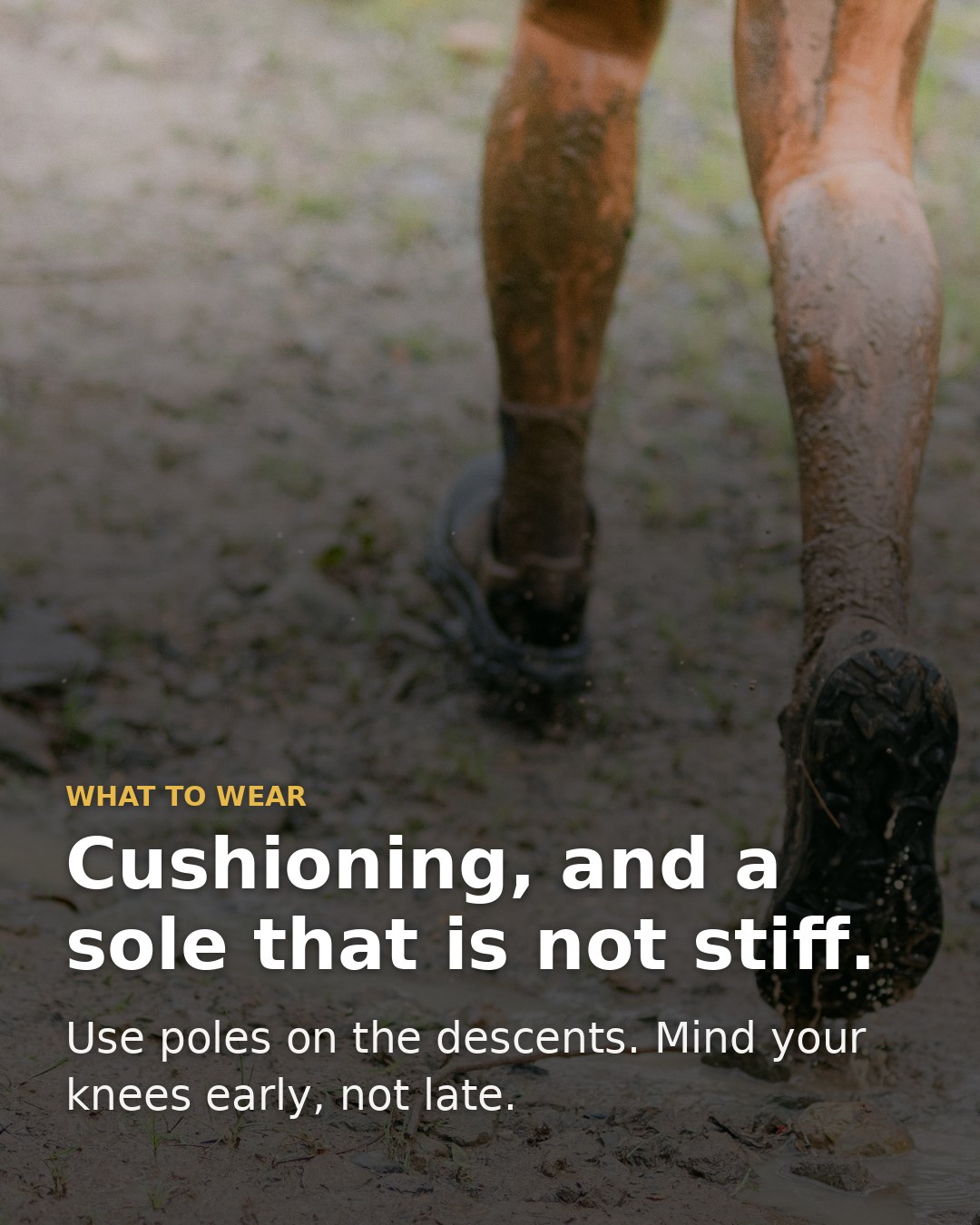
Trail runners are what most experienced pilgrims now wear here: light, generously cushioned, breathable, barely needing break-in. Mesh uppers dry overnight after a wet day. The downsides: less structure under a heavy load, and faster wear. A pair with a long season in it may not have the route left in its midsole.
Light walking shoes (low-cut hikers) are the halfway house: firmer soles, tougher uppers, more protection, at the cost of extra weight, warmth and break-in time; a sound choice if runners feel flimsy, especially outside high summer.
Boots offer support and weather protection nothing else matches; here you pay in heat and weight you mostly don't need: the right tool in a few situations (below), the wrong default.


The cobblestone problem
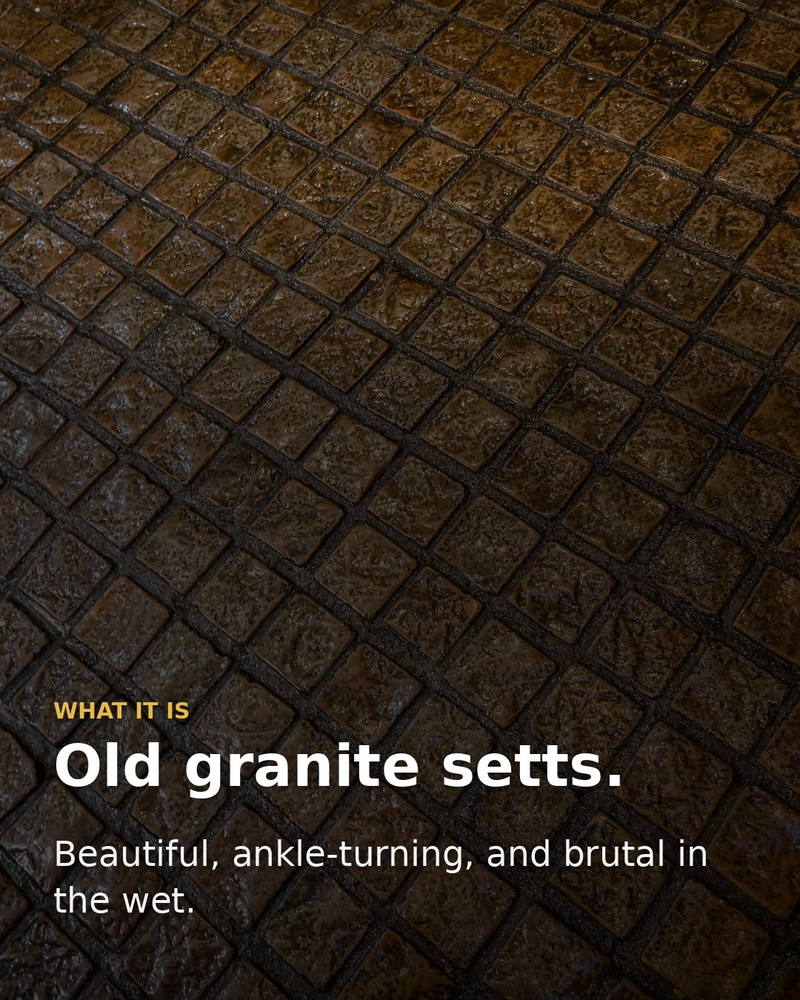
The surface that surprises people isn't mud or rock. It's stone. Portugal's traditional cobbles are beautiful and merciless: hard, slightly uneven, polished slick and slippery in the wet. Galicia swaps them for tarmac and gravel, gentler but still firm all day.
Two consequences. First, prioritise cushioning: tens of thousands of steps on stone hammer feet, knees and hips, and a generous midsole does more for you than any ankle support. Torn between two pairs? Take the more cushioned one. Midsoles die invisibly, long before uppers look worn. Second, grip: you want proper tread and rubber that holds on wet stone.
Waterproof or breathable? Let the season decide
Summer: skip the waterproof membrane. It gets properly hot here, membranes trap heat, and sweaty feet blister; the odd summer shower dries fast from mesh.
Spring and autumn: a judgement call. A membrane earns its keep in drizzle and wet grass, but once rain gets in over the collar, a waterproof shoe becomes a slow-drying bucket. Many long-distance walkers prefer the alternative: fast-draining mesh, merino socks, wet feet on the bad days, everything dried overnight. Be realistic about your tolerance, and check when to walk the Camino Português for your month.
Winter: waterproofing stops being a debate: persistent rain and mud are the norm; boots re-enter the conversation below.
Size up: your feet will be bigger by day three
Feet swell on a multi-day walk. Buy roughly half a size to a full size above your everyday fit, leaving a thumb's width in front of your longest toe. Fit them in the afternoon, when feet are largest, in your walking socks: a toe box roomy enough for toes to spread, a heel that stays locked. Get it wrong and the descents collect the debt. Toes tapping the front for a week is how toenails are lost.
The break-in protocol: weeks, not days
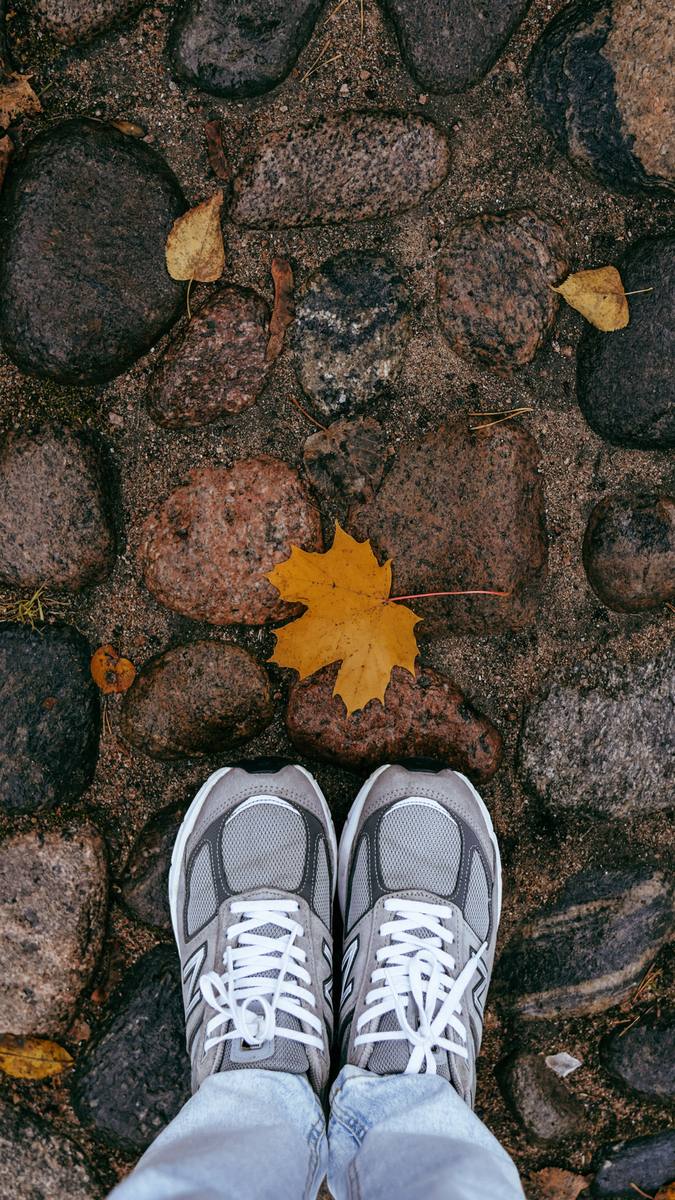
The rule is not negotiable: never start the Camino in new shoes. Not "try to avoid it". Never. Even shoes that need little breaking in need proving:
- Buy four to six weeks before you fly, leaving time to catch and fix a mistake.
- Wear them around town first. A few easy days catches an outright misfit while they're still returnable.
- Then walk properly, building distance week by week, in your walking socks and insoles.
- Finish with long back-to-back days under a loaded pack. The step most people skip and the most important: day two, on swollen feet, reveals what day one hides.
- Treat every hotspot as data. A rub at home is a blister in Galicia. Change the lacing, socks or shoes before you leave, not after Porto.
The back-to-back days do double duty with your fitness build-up: how to train for the Camino Português lays the plan out. The opposite mistake is real too: don't set out in a beloved pair that's half-dead. High mileage means a tired midsole however good the uppers look, so replace early enough to break in the successor.
Socks: merino first, liners if they earn it
Socks are half the system, and the rule is short: wool wins. Merino-blend walking socks regulate temperature, resist smell and, crucially, stay far less abrasive than cotton when damp. Cotton holds moisture against skin and is the classic blister-maker; leave it at home. Two or three pairs, washed and rotated, is plenty.
Then the liner debate. Some swear by a thin liner under the main sock: friction lands between fabric layers, not skin. Others find snug modern merino makes liners redundant, just one more layer of heat. Both camps are right about their own feet; find out which you are on training walks, not on the trail.
Blisters (and the case for evening sandals)
Blisters need heat, moisture and friction; prevention means denying them one. Keep feet dry: change socks at midday on hot days, air them at café stops. At the first hint of a hotspot, stop and tape it immediately, not at the next town. A blister kit weighs nothing, pharmacies are easy to find, and travel insurance covers anything worse.
And pack a second pair for evenings: sandals or feather-light camp shoes. They let feet decompress at day's end, let walking shoes dry overnight, and spare you the albergue shower floor. It's the one "extra" pair that earns its weight; the packing list shows where it fits.
When boots genuinely make sense
We've been hard on boots, so here's the other side. A light boot is the better choice when:
- You're walking in winter, with muddy inland stretches and cold, wet days on end.
- Your ankles have a history. After serious sprains or instability, support has real value, and your physiotherapist's advice beats ours.
- You're carrying a genuinely heavy pack (camping kit, say). More load, more structure, though the better fix is a lighter pack.
- You already own well-broken-in boots you trust. Hundreds of happy kilometres beat any untested shoe. Don't buy boots for this route, but don't bin trusted ones for it either.
Our pick
For most walkers, in most months, the best shoes for the Camino Português are well-cushioned trail runners: half a size up, over merino socks, broken in across four to six weeks ending with loaded back-to-back walks, plus sandals for the evening. Go airy mesh in summer; think waterproofing, or a light boot, in the wet season or if a case above applies. And wear your walking shoes on the plane: checked bags go missing, and they're the one thing you can't replace in Porto by Thursday.
Next steps: build the rest of the system around your shoes: what to pack (and what to leave at home), how to train so the break-in happens by itself, and the complete guide to the Camino Português for the rest.
Common questions
Are trail runners good for the Camino Português?
Yes, for most walkers they are the best choice. The route is low-altitude and mostly hard-surfaced, so cushioning, grip and breathability matter more than ankle support. Size up for swelling and break them in for several weeks first.
Do I need hiking boots for the Camino Português?
Usually not. On this route's cobbles and tarmac, boots mostly add weight, heat and blisters. They earn their place in winter mud, under a heavy pack, or on an injury-prone ankle, and broken-in boots you already trust beat any untested new shoe.
Should my Camino shoes be waterproof?
Let the season decide. In summer, breathable non-waterproof mesh keeps feet cooler and less blister-prone. In the wetter months a membrane earns its keep, though once soaked it dries slowly, so many walkers prefer fast-draining mesh with merino socks, dried overnight.
How long does it take to break in shoes for the Camino?
Allow four to six weeks: easy wear first, then walks of building length, then long back-to-back days under a loaded pack. Day two reveals what day one hides. Shoes are ready when they feel boring. Never start the walk in shoes bought the week before.