How Far Will You Walk Each Day on the Camino Português?
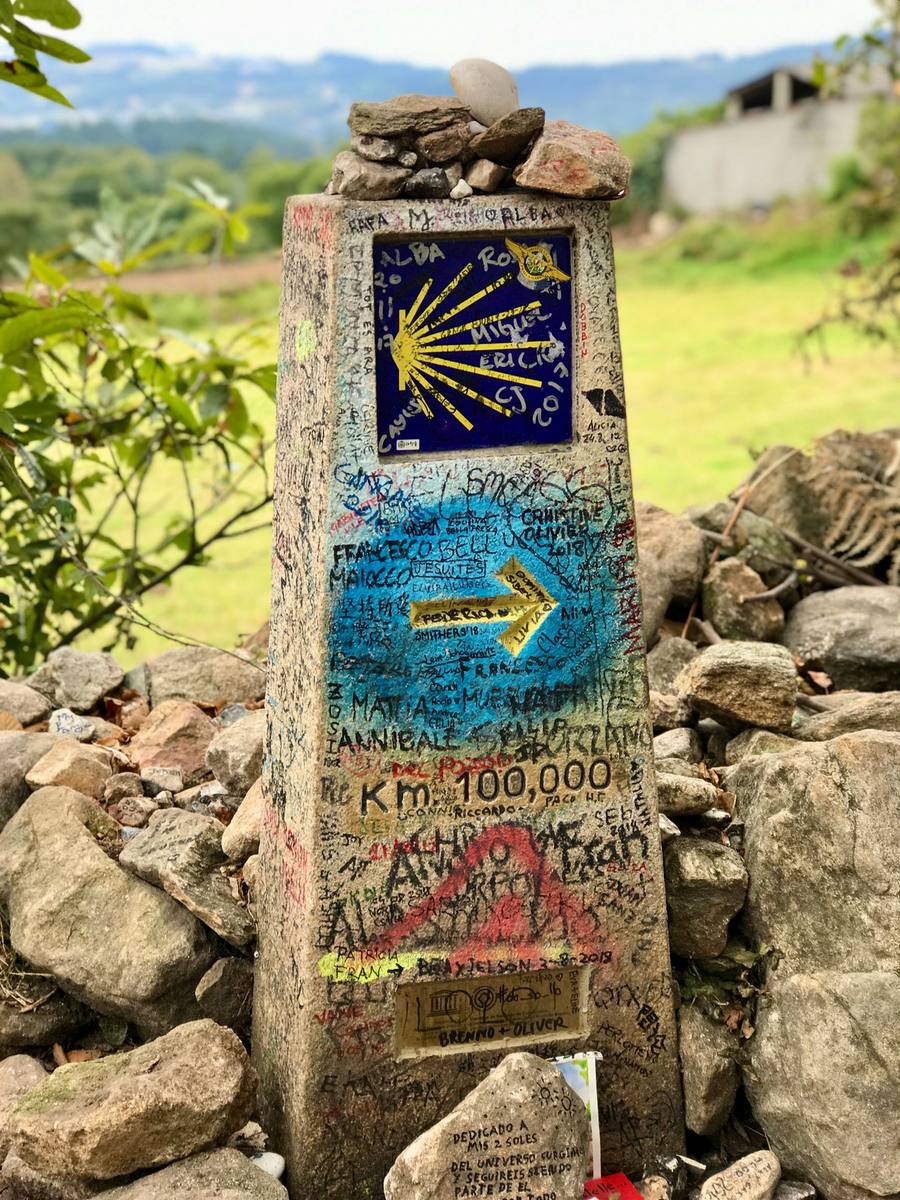
Short answer: most walkers cover 18–25 km a day on the Camino Português. The classic Central route from Porto to Santiago is 246 km on our own stage table (you'll see anything from 240 to 263 km quoted elsewhere) and takes 10–12 walking days. The Coastal route runs a touch longer: 12–13 days at 15–25 km. Start at Tui on the Spanish border and it's about 120 km: five to six days at around 20 km a day, still enough for the Compostela.
If you searched for the Camino Português distance per day hoping for one tidy number, here it is: plan around 20 km a day, expect a few days of 25 km or more, and know that almost every long stage has a sensible way to split it. That one habit, planning on 20 and splitting the monsters, is the difference between a walk you savour and a fortnight of limping.
Below are the standard stages, then the parts most guides skim: how fast you'll actually move with a pack and coffee stops, how fitness changes the plan, and when a shorter day is the smart call rather than the soft one.
The classic Central route: 11 stages from Porto
This is the itinerary you'll find, with minor variations, in nearly every guidebook and stage app. Distances shift by a kilometre or two depending on who measured and which variant they followed. Treat them as close, not gospel.
| Stage | From → to | Distance |
|---|---|---|
| Stage 1 | Porto → Vilarinho | ~27 km |
| Stage 2 | Vilarinho → Barcelos | ~28 km |
| Stage 3 | Barcelos → Ponte de Lima | ~34 km, often split |
| Stage 4 | Ponte de Lima → Rubiães | ~18 km |
| Stage 5 | Rubiães → Tui | ~19 km |
| Stage 6 | Tui → O Porriño | ~19 km |
| Stage 7 | O Porriño → Redondela | ~15 km |
| Stage 8 | Redondela → Pontevedra | ~21 km |
| Stage 9 | Pontevedra → Caldas de Reis | ~21 km |
| Stage 10 | Caldas de Reis → Padrón | ~19 km |
| Stage 11 | Padrón → Santiago de Compostela | ~25 km |
Add those up and you get about 246 km. Tour operators tend to quote 260–263 km; some stage lists say 240. Nobody is lying; they're measuring different city exits and waymarked variants. The short version: ten to twelve days of walking, averaging just over 20 km a day, whatever the total says. Notice the shape of it too: the two biggest days come early, through Portugal's farmland, and the Spanish half settles into kinder 15–25 km stages. For the town-by-town detail (what each stage is like underfoot, where to sleep), see our stage-by-stage guide from Porto to Santiago.
How many hours of walking is that?
On flat ground with fresh legs, most people walk at 4–5 km/h. Forget that number. On the Camino you'll carry a pack, stop for coffee (twice), take photos, queue for a stamp, fiddle with your boots and lose the arrows once a day, so your real door-to-door average lands closer to 3–4 km/h.
- 20 km: five to six and a half hours, door to door.
- 25 km: a seven-hour day once you add climbs and stops.
- 30 km and up: a full working day on your feet. Doable, rarely enjoyable, never twice in a row.
This is why pilgrims start early. Leave at 7–8am and even a 25 km day has you in town by mid-afternoon, with time for a shower, laundry and a long dinner. Leave at ten and the same stage eats the whole day, and in summer it puts you on exposed track through the hottest hours.
How fitness changes the number
The stage table assumes an averagely fit adult. Adjust it:
- You walk or run regularly: 25 km days are fine, and you'll finish tired but happy. The standard 11-stage plan suits you as written.
- Desk job, weekend walker: treat 20–22 km as your ceiling for the first few days. Your body adapts fast (most people are noticeably stronger by day four or five), but it has to survive days one to three first.
- New to multi-day walking, or carrying old knees: plan 15–18 km days and take 13–14 days from Porto. That isn't the remedial option; it's how you actually see the places you're walking through.
What first-timers underestimate isn't any single stage. It's repetition. A 25 km walk on a Saturday is easy. A 25 km walk the day after a 28 km walk, on feet that never fully recovered, with the same pack, is a different sport. Fatigue and blisters are cumulative, which is why we'd always plan the first three days conservatively and let the fitness arrive on the trail. Terrain matters less than you'd expect: the Central route is mostly gentle, with one real climb: the Labruja ascent to the Alto da Portela Grande after Ponte de Lima, which is exactly why that stage is a short 18 km. The cobbles, though, are hard on soles; respect them on days one and two out of Porto.
The long stages, and the ways to split them
Barcelos → Ponte de Lima (~34 km) is the stage that breaks people, and there is no medal for walking it whole. The classic split is at Balugães, roughly halfway, where albergues and guesthouses have grown up precisely because so many walkers stop there. Push a little further, to Vitorino dos Piães, and you leave yourself a gentle stroll into Ponte de Lima, arguably the prettiest town on the route, worth arriving in with energy to spare.
Porto → Vilarinho (~27 km) is long and, frankly, the least lovely walking of the whole route: suburbs, cobbles, industrial fringe. Three respectable fixes:
- Stop at Vairão, just short of Vilarinho, where the monastery albergue makes a memorable first night.
- Take the metro to Vilar do Pinheiro and start walking where the city thins out; it roughly halves the day, and you'll meet plenty of pilgrims doing the same.
- Leave Porto along the ocean on the Senda Litoral to Vila do Conde, sleep there, and cut inland to rejoin the Central route near São Pedro de Rates. A day longer, far nicer.
None of this is cheating. The Camino has no referee.
What about the Coastal route's daily distances?
The Coastal route from Porto runs 258 km as we walk it, and 270–280 km if you walk out of the city and follow every shoreline variant, and most people take 12–13 days at 15–25 km a day. It's flatter than the Central, with long stretches of boardwalk, and towns come often enough that you can shape stages to almost any length, forgiving for first-timers who want short days without long detours. It joins the Central route at Redondela for the final stages into Santiago. Choosing between the two is a bigger question than daily distance alone; we weigh it properly in our complete guide to the Camino Português.
Short on time? The last 100 km from Tui
To earn the Compostela you must walk at least the final 100 km into Santiago. Starting at Tui, on the Spanish bank of the Minho, gives you about 120 km (comfortably over the line) in five to six days of roughly 20 km each. It's the most popular short version for good reason: an easy border-town start, the gentler half of the route, and the certificate at the end. If you can stretch to an extra day or two, or you'd rather cherry-pick the best scenery instead of the final stretch, we've weighed the options in the best sections of the Camino Português when you're short on time.
When to book shorter days on purpose
A short day isn't a concession; sometimes it's simply the right call. Plan them deliberately when:
- It's days one to three. Feet harden and shoulders adjust in the first stretch. Front-load the short days and the rest of the walk thanks you.
- You're walking in high summer. In July and August you want to be done by early afternoon. An 18 km day finished at 1pm beats a 28 km day finished at six, every time.
- The stage before was a monster. The day after Barcelos → Ponte de Lima (if you didn't split it), or after the Labruja climb, is a good day to go easy.
- You're arriving in Santiago. Padrón → Santiago is 25 km and the final approach is suburban. Plenty of walkers stop short at Teo or O Milladoiro and stroll into the old town fresh the next morning instead of staggering in at dusk.
One practical consequence: shorter days mean more nights, so in spring and summer the popular small towns are worth booking ahead, and the extra nights nudge your budget, which we've costed in what the Camino Português really costs. If you'd rather someone else did the arithmetic, the ready-made itineraries are built on sane daily distances.
Our take
Plan on 20–22 km a day, give yourself 11–12 days from Porto, and split Barcelos → Ponte de Lima unless you know exactly why you aren't. Nobody finishes the Camino wishing they'd rushed it, and distance per day is a tool, not a score. The walkers having the best time are rarely the ones covering the most ground. Sort the small practical things before you fly (data, transfers and insurance), then let the route set the rhythm. It's better at it than any spreadsheet.
Next steps: turn the numbers into a plan: the stage-by-stage guide from Porto to Santiago, the best sections if you're short on time, and the complete guide to the Camino Português.