Camino Português, Stage by Stage: Every Day from Porto to Santiago
Updated August 2026
In short: the Central Camino Português from Porto to Santiago is roughly 240–260 km (these stages add up to about 246 km, which is what our own package walks) in about 12 days (11 walking days plus a rest day, or 13–14 if you split the longest stages). The hardest day is the climb to Alto da Portela Grande before Rubiães; the longest is Barcelos to Ponte de Lima (~34 km), which most people break in two. You cross into Spain at Tui, which is also where the last 100 km starts for the Compostela. Below is the whole route, day by day.
The Central Camino Português from Porto to Santiago is roughly 240–260 km (we walk it as 246 km), and most people take 12 days, give or take, depending on how you split the long stretches. Below is the whole thing, day by day: where you start, how far you walk, what the ground is like under your feet, and the town you sleep in. This is the short version, not the brochure one.
A note before we set off: these are the classic Central-route stages. They're a frame, not a rule. Slower walkers happily turn 12 days into 14; strong ones compress. The trail doesn't care how you carve it up, so pick the version that fits your legs.
Before the first step: which route are these stages?
This breakdown follows the Central route, the inland, historic path through Barcelos, Ponte de Lima and Tui. If you're torn between this and the ocean path, sort that decision first; it changes every stage that follows. Read Coastal or Central? How to choose your route before you commit, because picking the wrong one is the most common regret we hear.
Stage 1: Porto to Vilarinho (or Vairão) · ~27km
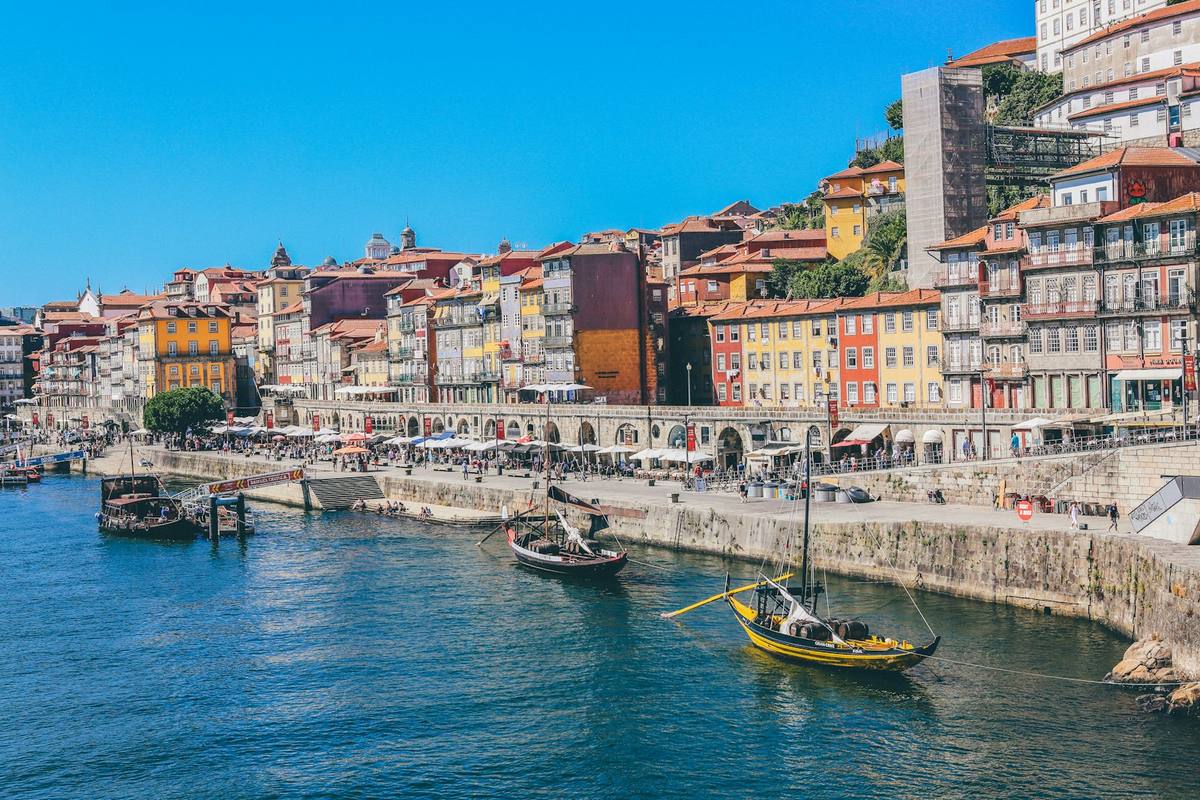
The truth: the way out of Porto is the least magical day of the whole walk. You thread through suburbs, industrial edges and a fair bit of cobble and pavement before the countryside finally opens up. Many walkers skip it entirely by taking the metro to Vilar do Pinheiro and starting from there. No shame in it. If you do walk out, aim for Vilarinho, or stop short at Vairão (the old monastery albergue). Hard cobbles all day; this is the stage your feet remember, so see what to pack and get the shoes right.
Stage 2: Vilarinho to Barcelos · ~28km
Now it feels like the Camino. Quiet lanes, vineyards, eucalyptus, little stone chapels. It's a long day and a rolling one, so don't underestimate it. Barcelos is a proper reward at the end: famous for its rooster legend, a big medieval bridge over the Cávado, and a genuinely good place to eat. If 28km is too much, split it at Rates, which has an albergue and a beautiful Romanesque church.
Stage 3: Barcelos to Ponte de Lima · ~34km
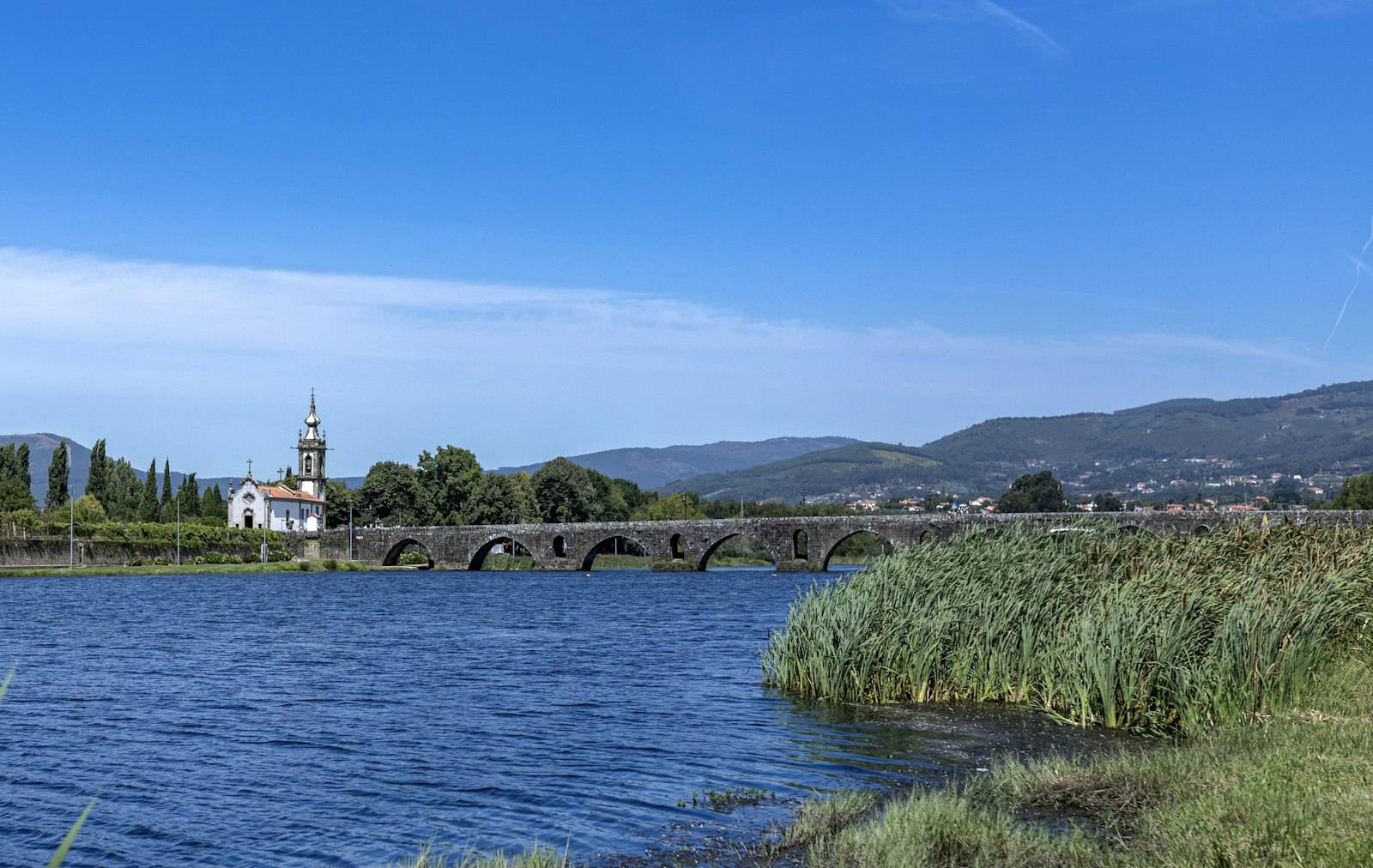
The longest single stage on the classic schedule, and the one people most often break in two. The walking is lovely (farmland, woods, the odd steep little climb), but 34km is a big ask on tired legs. Split it at Balugães or Vitorino dos Piães if you can. Ponte de Lima itself is the prize: arguably the most beautiful town on the route, strung along a wide river behind its long Roman-medieval bridge. Try to arrive with daylight to spare so you can just sit by the water.
Stage 4: Ponte de Lima to Rubiães · ~18km
Short in distance, but this is the day with the climb: Alto da Portela Grande, a stony ascent of around 400m that most people find the toughest single stretch of the route. It's not dangerous, just steep and rocky underfoot, so take it slow, start early in summer, and enjoy the descent into the valley. Rubiães is small (an albergue, a café or two); some walkers push on a little further to break the next day.
Stage 5: Rubiães to Tui · ~19km
A gentler day that ends with a quiet milestone: crossing the international bridge over the Minho river from Valença, Portugal, into Tui, Spain. You step from one country to another mid-walk, the clocks jump an hour forward, and the language shifts. Tui has a fortress-like cathedral and a lovely old town. This is also the spot that matters most if the certificate is on your mind.
Stage 6: Tui to O Porriño · ~19km
Tui is where the last 100 km starts; from Tui to Santiago is about 120 km, comfortably over the Compostela minimum. It is the stretch that earns your Compostela, so this is where the trail suddenly fills with newer pilgrims who've started at the border. There's a well-known industrial stretch on the way into O Porriño; a signed riverside alternative makes the day far nicer, so ask locally or check your notes. Short day overall: a good one to take easy and soak up the building energy.
Stage 7: O Porriño to Redondela · ~15km
Rolling Galician countryside, woods and hamlets, with a climb and a descent into Redondela, a friendly town set under two tall railway viaducts. Short enough that you arrive with the afternoon free. If you're feeling strong you can combine this with the next stage, but Galicia's hills make the days feel longer than the numbers suggest.
Stage 8: Redondela to Pontevedra · ~21km
A pretty day with a real highlight: the medieval bridge and village of Arcade, famous for its oysters, then woodland paths into Pontevedra. Pontevedra's old town is one of the best on the whole Camino: car-free granite squares, tapas bars, the curved Santuário da Peregrina church shaped like a scallop shell. Arrive early and give yourself the evening here; it's worth it.
Stage 9: Pontevedra to Caldas de Reis · ~21km
Gentle, green and easy underfoot: forest tracks and farmland. Caldas de Reis is a small spa town with natural hot springs; there's a free public fountain where you can soak your feet in warm mineral water at the end of the day, which after nine days of walking feels close to a miracle. A restful stage before the final push.
Stage 10: Caldas de Reis to Padrón · ~19km
More woods and rolling country into Padrón, a town thick with Saint James legend; tradition says his body was brought ashore here. It's also the home of the little green padrón peppers ("some are hot, some are not"), so order a plate with your dinner. You're close now; you can feel Santiago pulling.
Stage 11: Padrón to Santiago · ~25km
The final full day, and a longer one. The countryside slowly gives way to the outskirts of Santiago, and the anticipation does a lot of the work in your legs. Some walkers stop a few kilometres short (around O Milladoiro or Teo) to make the arrival itself a short, ceremonial morning. However you do it, the moment you step into the Praza do Obradoiro in front of the cathedral is the one everyone describes, and it lives up to it.
How long does the whole thing really take?
On this classic schedule, 11 walking days gets you from Porto to Santiago, and most people add a rest day (often in Ponte de Lima or Pontevedra) to make it a round 12. If you split the two longest stages (Barcelos to Ponte de Lima especially) you're looking at 13–14 relaxed days. There's no prize for speed. The people who enjoy it most build in slack.
What if you don't have two weeks?
You don't need the full route to feel the Camino. The last stretch from Tui covers the 100km that earns your Compostela in 5–6 days and still delivers the full arrival into Santiago. The best shorter options are broken down in the best sections to walk if you're short on time. Start there if your calendar is tight.
What decides whether the stages flow?
Here's what the stage list doesn't show: the difference between a great day and a grim one is rarely the walking; it's whether your bed is booked when you limp into town at 5pm, whether your pack is waiting at the next hotel instead of crushing your shoulders, and whether you know what's coming on tomorrow's stage. Sort those, and every day above becomes the version people fall in love with. For the wider plan (route choice, season, training, packing) start with the complete guide to walking the Camino Português.
And before you even reach the first stage, two practical things make the rest easier: book your flights into Porto early, and handle the small stuff (eSIM, airport transfer, insurance) before you set off.
Next steps: turn these stages into a plan: decide Coastal or Central first, sort where to sleep along the way, and check when to walk. Then build it all into the Camino Português planner.
Common questions
How many days does the Camino Português take from Porto?
The Central route from Porto to Santiago is roughly 240–260 km, and the spread comes from where you leave Porto and which variants you take. The stages below add up to about 246 km, which is what our own package walks. Most people take about 12 days: eleven walking days covers it on the classic schedule, and many add a rest day to make a round 12; splitting the two longest stages stretches it to a relaxed 13–14 days.
What are the hardest stages of the Camino Português?
The climb to Alto da Portela Grande between Ponte de Lima and Rubiães, a stony ascent of around 400 m, is the toughest single stretch for most walkers. The longest stage, Barcelos to Ponte de Lima at about 34 km, is the one people most often split in two.
Where does the Camino Português cross from Portugal into Spain?
You cross the international bridge over the Minho river from Valença, Portugal, into Tui, Spain, on the stage from Rubiães. The clocks jump an hour forward and the language shifts mid-walk.
Where is the 100km marker on the Camino Português?
Tui is where the last 100 km starts; from Tui to Santiago is about 120 km, comfortably over the Compostela minimum. It is the stretch that earns the Compostela, so the trail fills with newer pilgrims who start at the border. Walking from Tui takes about 5 to 6 days.
Is the first stage out of Porto worth walking?
The way out of Porto is the least scenic day: suburbs, industrial edges and a lot of cobble before the countryside opens up. Many walkers skip it by taking the metro to Vilar do Pinheiro and starting from there, which is common and carries no stigma.