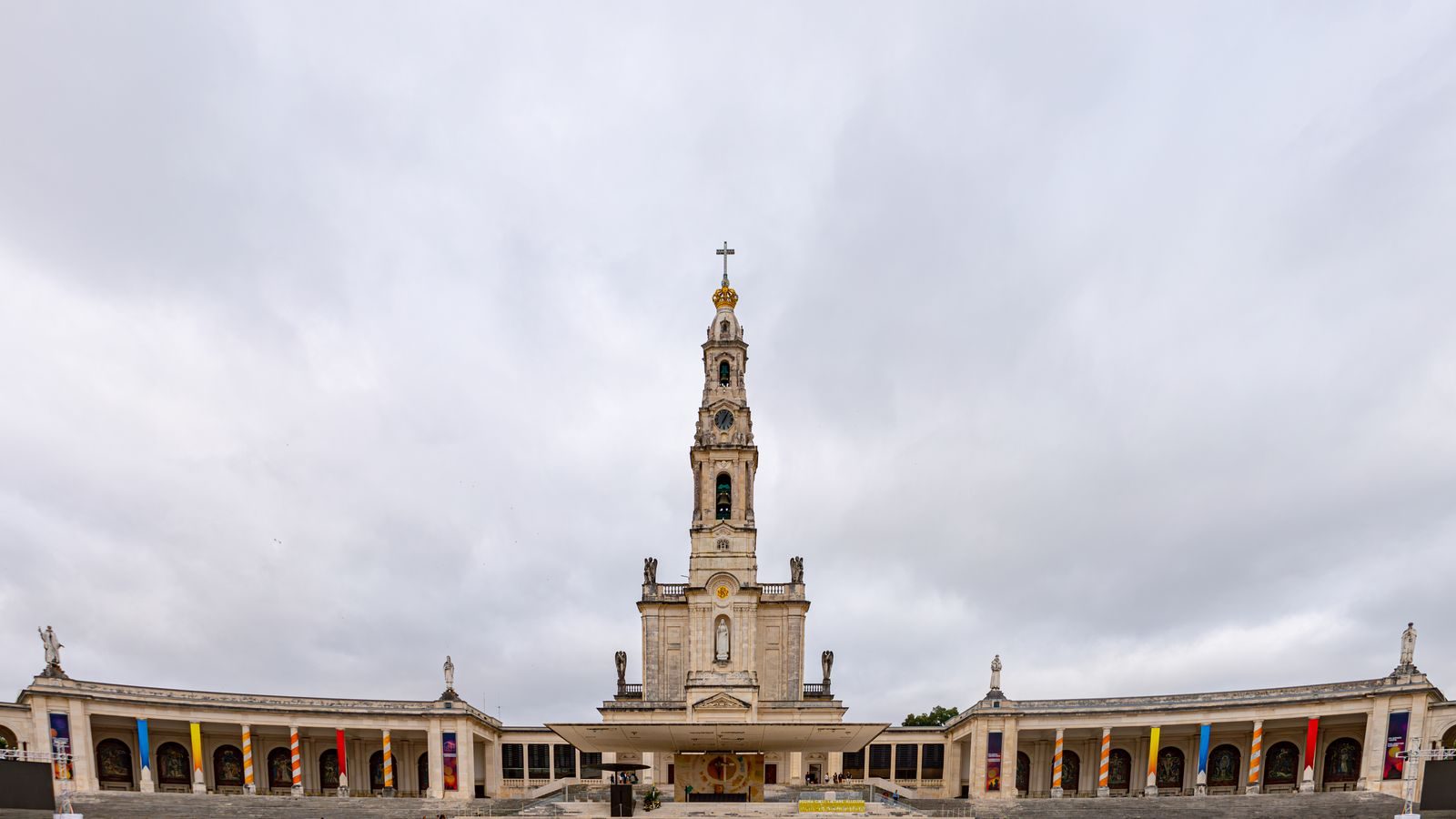
Walk Lisbon → Fátima on the Caminho do Tejo, the Tagus route.
From €825 sharing · €1,200 solo
- Distance
- 146.6 km
- Nights
- 9
- Walking days
- 8
- Daily distance
- 15 to 21.2 km
- Rooms
- Private room, private bathroom
- Breakfast
- Included
- Bags
- Moved every day
- Price
- €825 sharing · €1,200 solo
One booking. Nine nights. Zero logistics.
Everything below is priced in euros and per person. What you see is what the package is.
What's included
- Hand-picked rooms with private bathroom: all 9 nights, breakfast included, in the towns where the stages end.
- Daily luggage transfer: one bag up to 20 kg per person, moved door to door while you walk with a daypack. The same for a solo walker, no supplement.
- Digital roadbook + GPX tracks: stage notes for your phone, plus files for any GPS app or watch.
- Pilgrim credential: your stamp book, ready at your first hotel.
Optional extras
- Extra nights before, during or after the walk: €110 per room per night in the walking towns, €125 in Lisbon, one or two people
The 9 nights, stage by stage.
Eight stages from Lisbon Cathedral to the Santuário de Fátima, measured on the waymarked route as OpenStreetMap maps it. They are shorter days than the usual six stage split, which runs to more than 30 km a day in the middle. Our Lisbon to Fátima guide covers the route in detail.
- Night 1 Arrive in Lisboa
Settle in near the cathedral, collect your credential and your first stamp.
Night 220.7 km
You start at Lisbon Cathedral, the Sé, and walk on asphalt through the city and along the riverfront to Parque das Nações, an easy, urban morning with places to eat all the way. Past Sacavém the route turns north through the suburbs to Póvoa de Santa Iria. This first day shares its streets with the Way of St James, so you will see yellow arrows beside the blue ones that lead to Fátima.
↑ 67 m↓ 0 mNight 315 km
A short, flat day by the Tagus. Most of it follows the riverside paths north through Alverca and Alhandra, where there are cafés, to Vila Franca de Xira. Watch for one stretch on a busy road after Alverca.
↑ 32 m↓ 0 mNight 420.2 km
A flat day on earth tracks and asphalt: about 6 km to Vala do Carregado, where there are small cafés, then 4 km to Vila Nova da Rainha. The last 7 km to Azambuja are on a national road with heavy traffic and wide verges: walk on the left, facing the cars, and take extra care near the power station.
↑ 16 m↓ 2 mNight 517.4 km
Out of Azambuja the route crosses the lezíria, the flat farmland of the Tagus, on dykes and field roads through Quinta do Alqueidão and Valada, which has a picnic park and a river beach. There are no drinking water points on this stretch and few cafés, so leave with full bottles. The road from Azambuja to Valada can flood in winter.
↑ 22 m↓ 1 mNight 615.7 km
From Porto de Muge you walk on through Caneiras and Marvila with the river close by, partly on a national road and over railway crossings, so take care. The day ends with the steep Calçada da Junqueira, the old cobbled climb into the upper town of Santarém.
↑ 113 m↓ 3 mNight 721.2 km
You leave Santarém on an old military road to Azóia de Cima, about 8 km, then go on through Azóia de Baixo and Advagar to Arneiro das Milhariças. The country turns hilly after the flat river days: this stage climbs close to 500 m in all, on earth tracks and minor roads. There are facilities in Azóia.
↑ 145 m↓ 20 mNight 819.6 km
The hardest day of the walk. You pass the springs of the Alviela river, with a bathing area, then climb steeply to Monsanto, where you can eat. From Monsanto the route crosses the limestone hills of the Serra de Santo António to Minde, about 8 km of rough tracks, climbing to around 400 m. About 700 m of ascent in the day.
↑ 402 m↓ 47 mNight 916.8 km
The last stage crosses the Serras de Aire e Candeeiros natural park, with picnic areas at Covão do Coelho and Covão do Feto, then goes through Giesteira. The final 7 km or so follow a road, the Estrada da Moita do Martinho, to the Santuário de Fátima, the highest point of the walk at about 440 m.
↑ 444 m↓ 205 m
Press a stage to see the day.
Route data © OpenStreetMap contributors, ODbL
Payment and cancellation
- 25% deposit of the package price confirms the booking. Of that, €150 per person is a booking fee that is not refunded if you cancel.
- Balance due 42 days before your start date. Book inside 42 days and the full price is payable at confirmation. If the balance has not arrived 7 days after the due date, the booking is cancelled. You may also pay the full price at booking.
If you cancel, we refund what you've paid, less the €150 per person booking fee:
| Notice before the start date | Refund |
|---|---|
| 42 days or more | 100%, less the booking fee |
| 41 to 21 days | 50%, less the booking fee |
| 20 to 14 days | 25%, less the booking fee |
| Under 14 days, or no-show | 0% |
Lisbon to Fátima, answered.
The questions we hear most about this trip, answered plainly.
Booking and payment
How do I book this trip?
Send the request form with your month and how many of you are walking. We write back with the plan, night by night, and the price for your dates. This trip is planned on request: it is not on the online checkout.
What does the price cover?
€825 per person with two sharing a double or twin, or €1,200 walking solo in your own room every night. That is 9 nights with private bathroom and breakfast, your bag moved every walking day, the roadbook and GPX tracks, and the credential. An extra night costs €110 per room in the walking towns.
The walk
Is this the same as the Camino de Santiago?
No. It is a pilgrimage walk of its own, to the Santuário de Fátima, waymarked with blue arrows. Only the first day out of Lisbon shares its streets with the Way of St James, which heads north to Santiago, so you will see yellow arrows there too.
Do I get a certificate?
Yes, if you ask for it. The Santuário de Fátima issues a walking certificate, part of its Via Pacis programme, to pilgrims who arrive on foot. You need a pilgrim credential with stamps from your walk, at least one at your starting point, and you must have walked at least 13 km. You request it at the Santuário's service desks on arrival. It is new: the Santuário issues it from 29 November 2026.
When is the best time to walk it?
Spring and autumn. Summer is possible if you walk in the mornings and late afternoons. In winter the road across the lezíria between Azambuja and Santarém can flood, and on the 12th and 13th of each month from May to October Fátima fills with pilgrims, most of all in May and October.
Can I start in Santarém or walk fewer days?
Ask us with the request form. Tell us where you would like to start and how many days you have, and we plan the nights around it.
What is the hardest stage?
Arneiro das Milhariças to Minde, over the Serra de Santo António, with about 700 m of climbing on rough limestone tracks. The first days along the Tagus are flat; the hills begin after Santarém.
Is it well waymarked?
The route is marked with blue arrows. Waymarking on the Ribatejo stretch, from Vila Nova da Rainha through Valada to north of Santarém, was renewed in October 2025. Elsewhere marks can be sparse, so the GPX track in your roadbook helps.
Rooms and bags
How does the luggage transfer work?
Each morning you leave one bag, up to 20 kg per person, at your hotel's reception with its tag, and walk with a daypack. The bag is driven to your next night's hotel and is there by late afternoon. Valuables, medication and what you need on the trail stay in the daypack.
Are there busy dates to avoid?
The 12th and 13th of each month from May to October, when the Santuário holds its pilgrimages, and above all in May and October. Fátima is at its busiest then. We book every night before you walk, so plan around them or tell us early.
Lisbon to Fátima follows the Caminho do Tejo, the Tagus route: from Lisbon Cathedral up the river through Vila Franca de Xira and the flat farmland of the Ribatejo to Santarém, then into the limestone hills and over the Serra to the Santuário de Fátima. Eight days, 146.6 km.
Worth knowing: the first five days are flat and partly on roads, some of them busy; the last three climb into the hills, and Arneiro das Milhariças to Minde is the hard one. There are long stretches with few cafés and no water points, so you carry water every day.
"From the Sé in Lisbon to the Santuário, along the Tagus and over the hills."
Read before you decide.
Three things to know about this route before you choose your dates.
Floods on the lezíria
The road across the lezíria between Azambuja and Santarém, stages 4 and 5, floods in some winters. When it does, we reroute you or move that day.
Carry water
Some stretches have very few cafés and no drinking water points, most of all across the lezíria. Leave every morning with full bottles.
The 12th and 13th
From May to October Fátima fills with pilgrims on the 12th and 13th of each month, most of all in May and October. Plan around them, or book early.